



Church of Saint Dominic
 See all tours
Church of Saint Dominic
360
Church of Saint Dominic
Year of construction 1681
AddressVia San Domenico, 22
Coordinates40.6289111,16.938886899999943
Church
- Share on



Church of Saint Dominic
Via S. Domenico, 22
First Exterior
The church known as Saint Dominic was dedicated in ancient times to the Annunciation of Our Lady. It was built in the southern part of the city, near the walls, where a monastery of the Dominican Order was successively (1412) added and to which it was entrusted. The current name was changed between the end of the 16th and the beginning of the 17th century, when the whole building was enlarged. The only original parts still preserved until today are the choir and a chapel once used as burial ground.
The parvis can be reached by a side staircase.
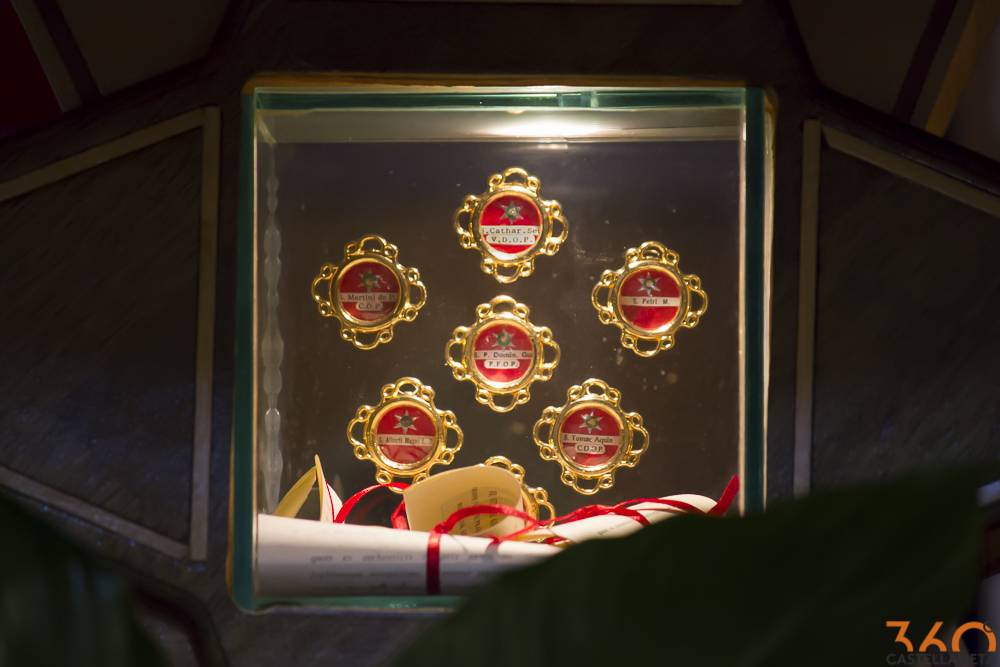
When the religious orders were suppressed in 1809, the monastery was assigned to civil uses such as Town Hall, library, prison and more. Nowadays it houses the parish, founded in 1939 and blessed on its 60th anniversary with a relic of St. Dominic from his main sanctuary in Bologna.
Second Exterior
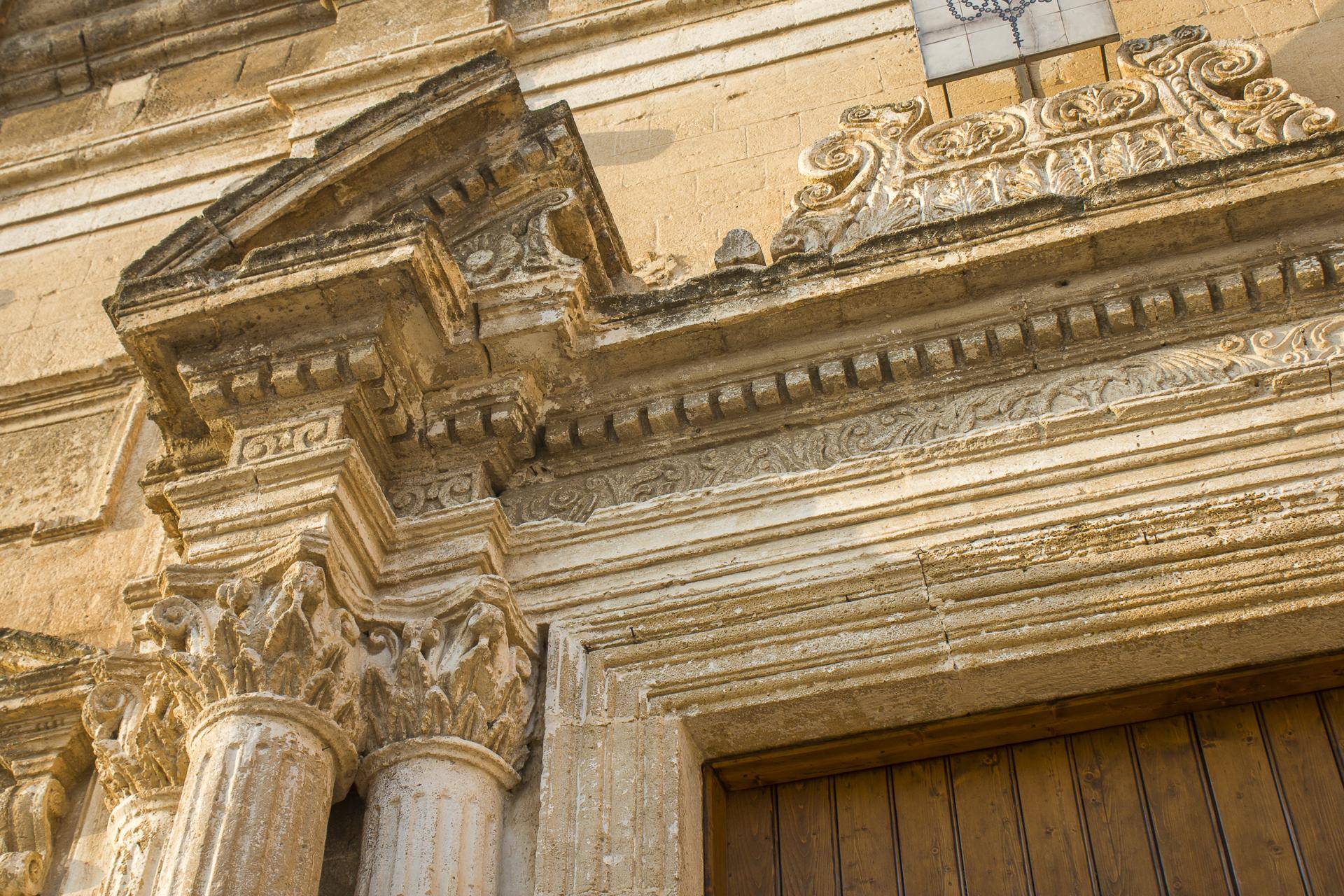
The façade has a double order divided by vertical pilasters. It is also divided by a stringcourse ledge indicating the floor division, with lesenes ending in an Ionic capital. The lesenes are used to mark the space of the nave from the transept, forming three frames enriched by niches and tympanums. The entrance portal has fluted columns and semi-columns surmounted by a pediment with a broken tympanum. The triangular tympanum on the façade was never completed.
First Interior
The church interior has a Latin cross shape, with three chapels on each part of the single nave. Its round arches form a barrel vault with lunettes groined at the intersection with the windows and the side chapels. The vault intersects with that of the transept, where you can read the inscription “MAST. (Master) ANTONIO MALDARIZZI MDCLXXXI”. The presbytery dominates the nave.
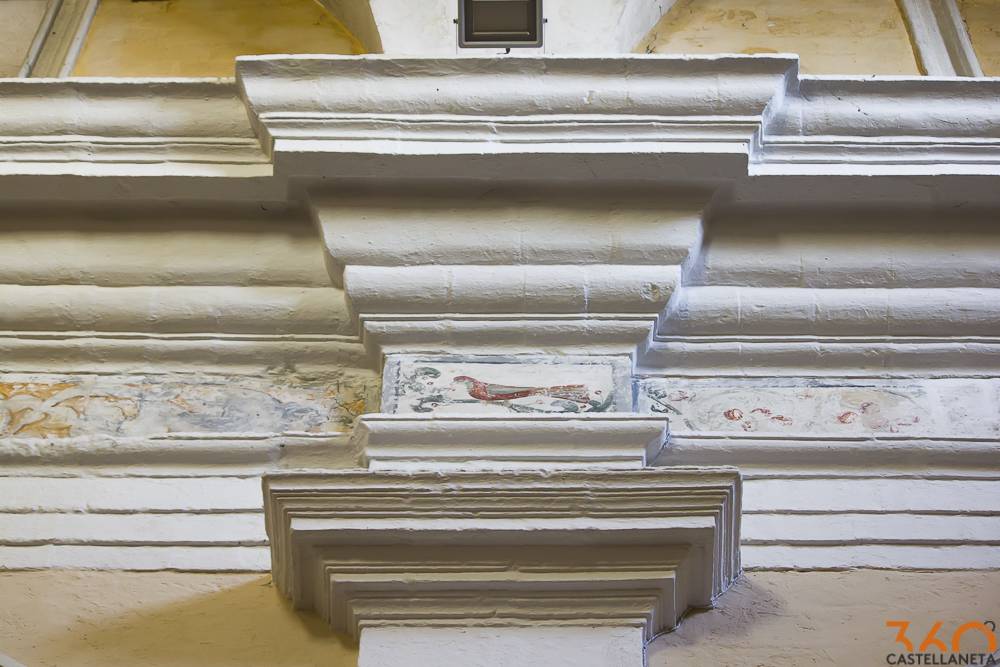
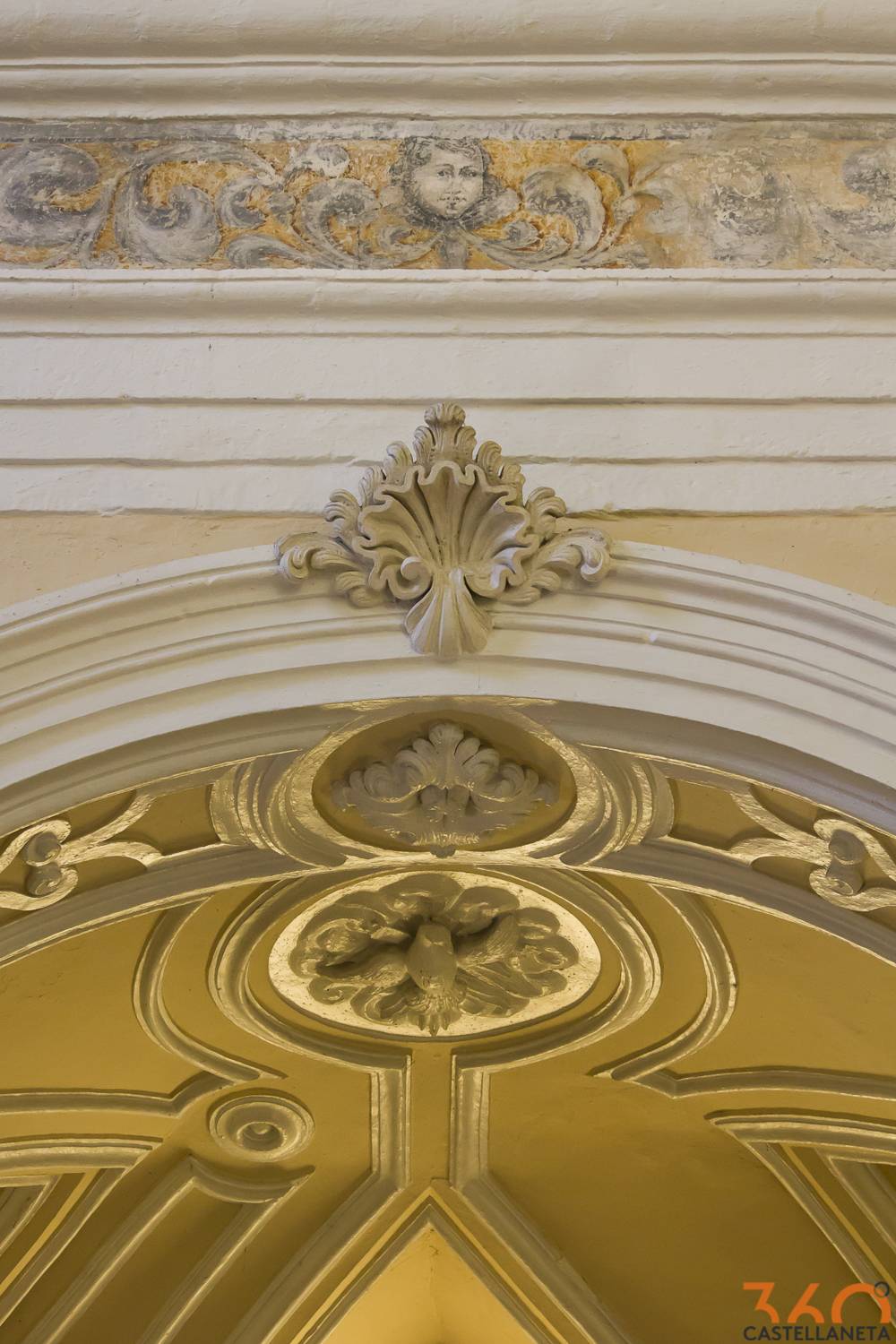
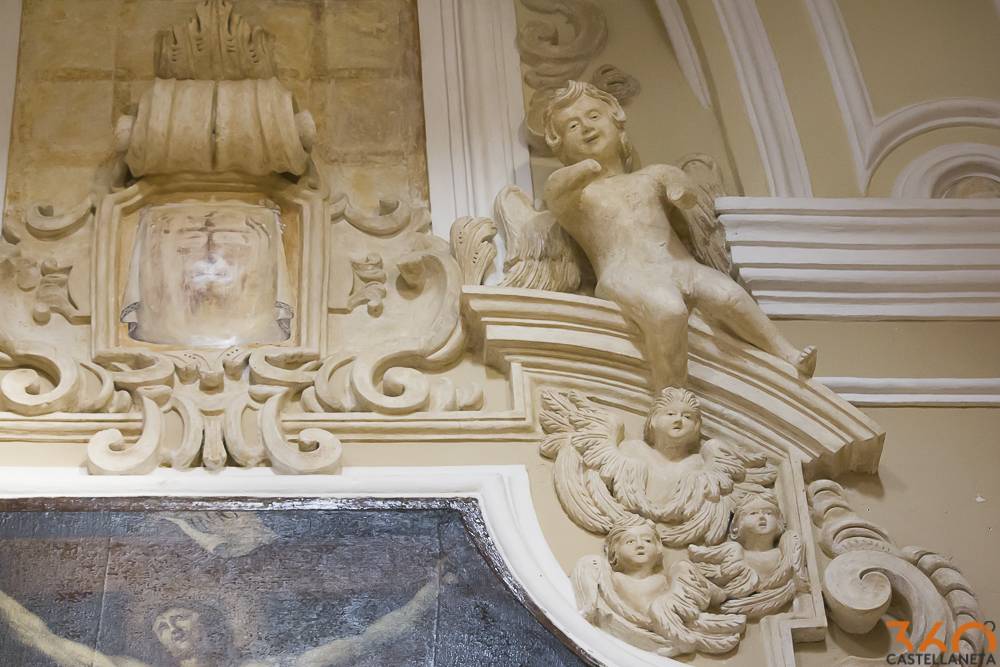
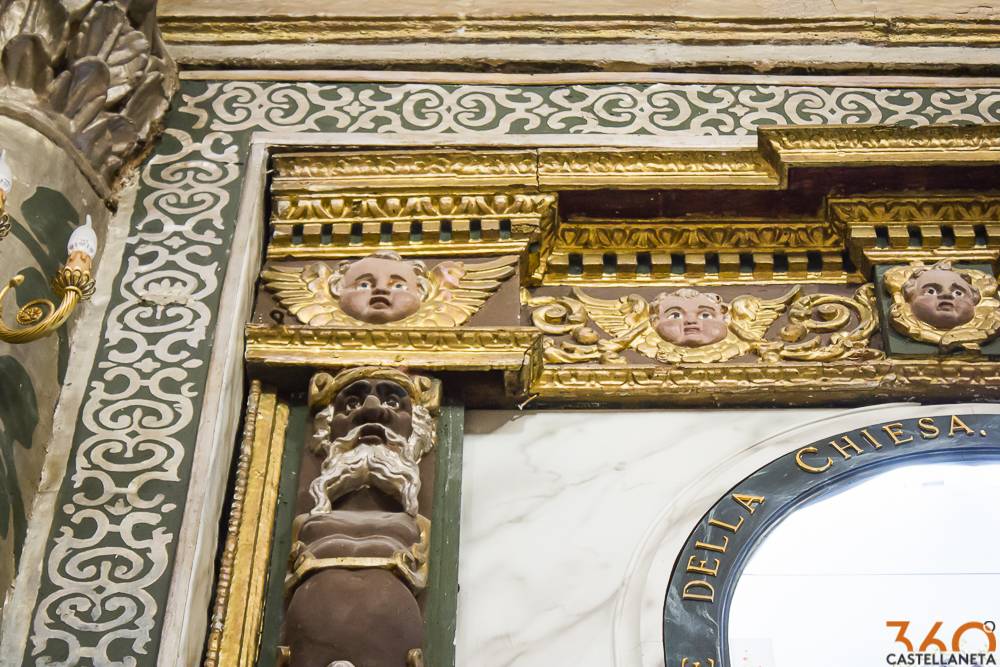
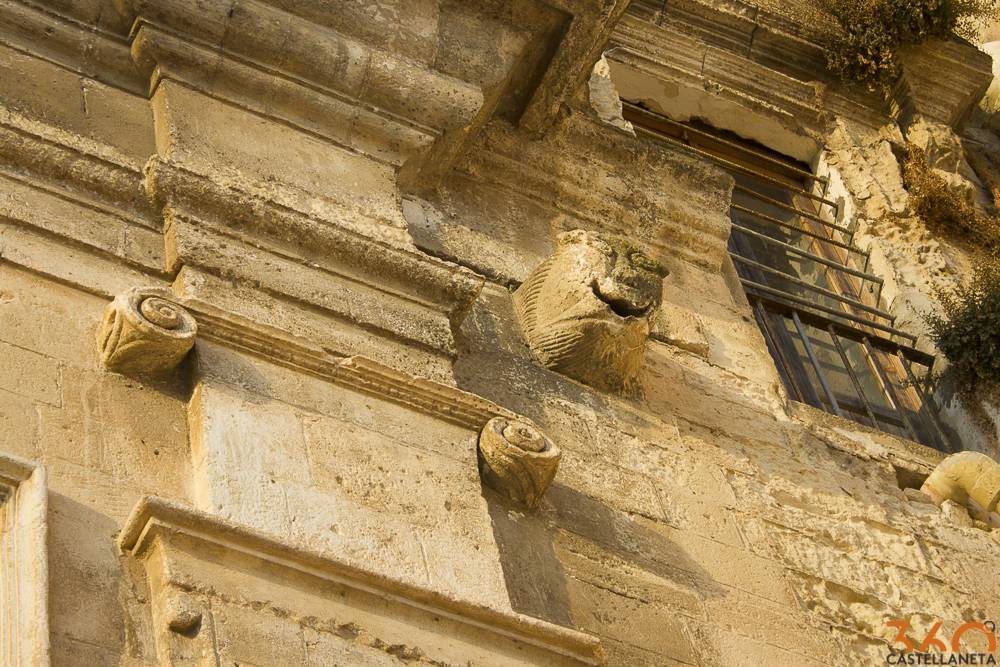
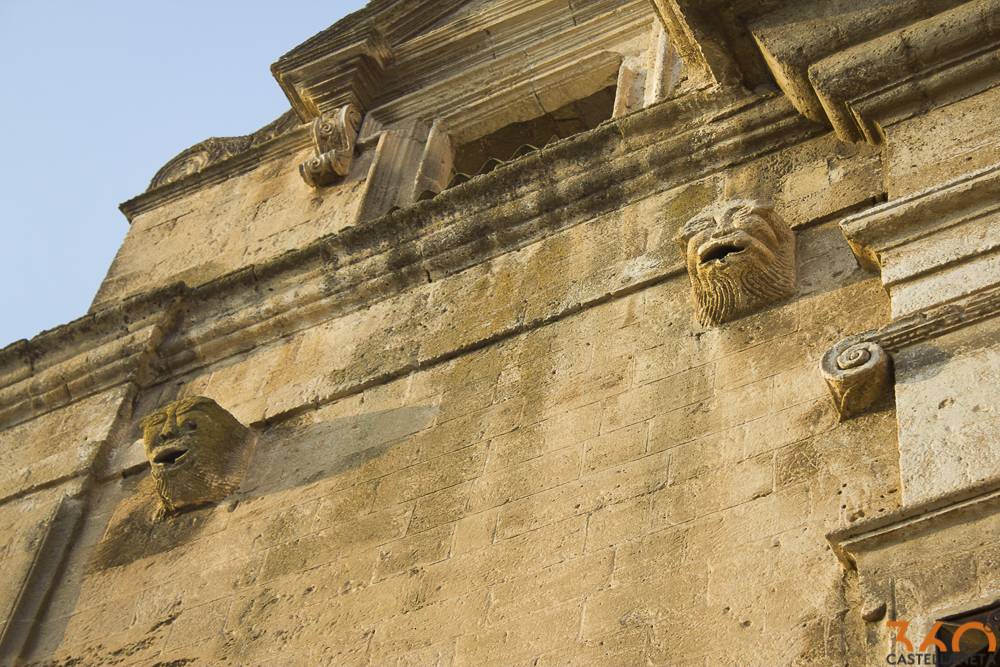
The band on the stringcourse is decorated with friezes, floral motifs, mythical creatures and human faces, probably those of the artists and their patrons.
Originally, the church used to have nine altars: the high altar, two in the transept dedicated to St. Dominic and to the Holy Rosary, and six in the side chapels dedicated to the Crucifix, to the Annunciation of Our Lady, to St. Vincent, St. Peter Martyr, St. Thomas and St. Rose.
The first chapel on the left, which houses the monumental baptismal font, has replaced the altar of St. Thomas built in 1685, but still hosts the Ecstasy of St. Thomas, a painting by Lucrezia Ubaldini from Bari where the saint raises his arms and eyes to the sky, surrounded by angels. Below we find the lit torch, a Dominican symbol, while above the inscription “ESSA CRUCE MIRIFICA CINGIST…” On the plaque “P. IOES. BAPTA CONVER.S / A CASTA HOC FACERE FEC.T/PRO EIUS DEVOTE ANNO D.NI 1685”.
The first chapel on the right is dedicated from 1952 to St. Lucy.
Second Interior
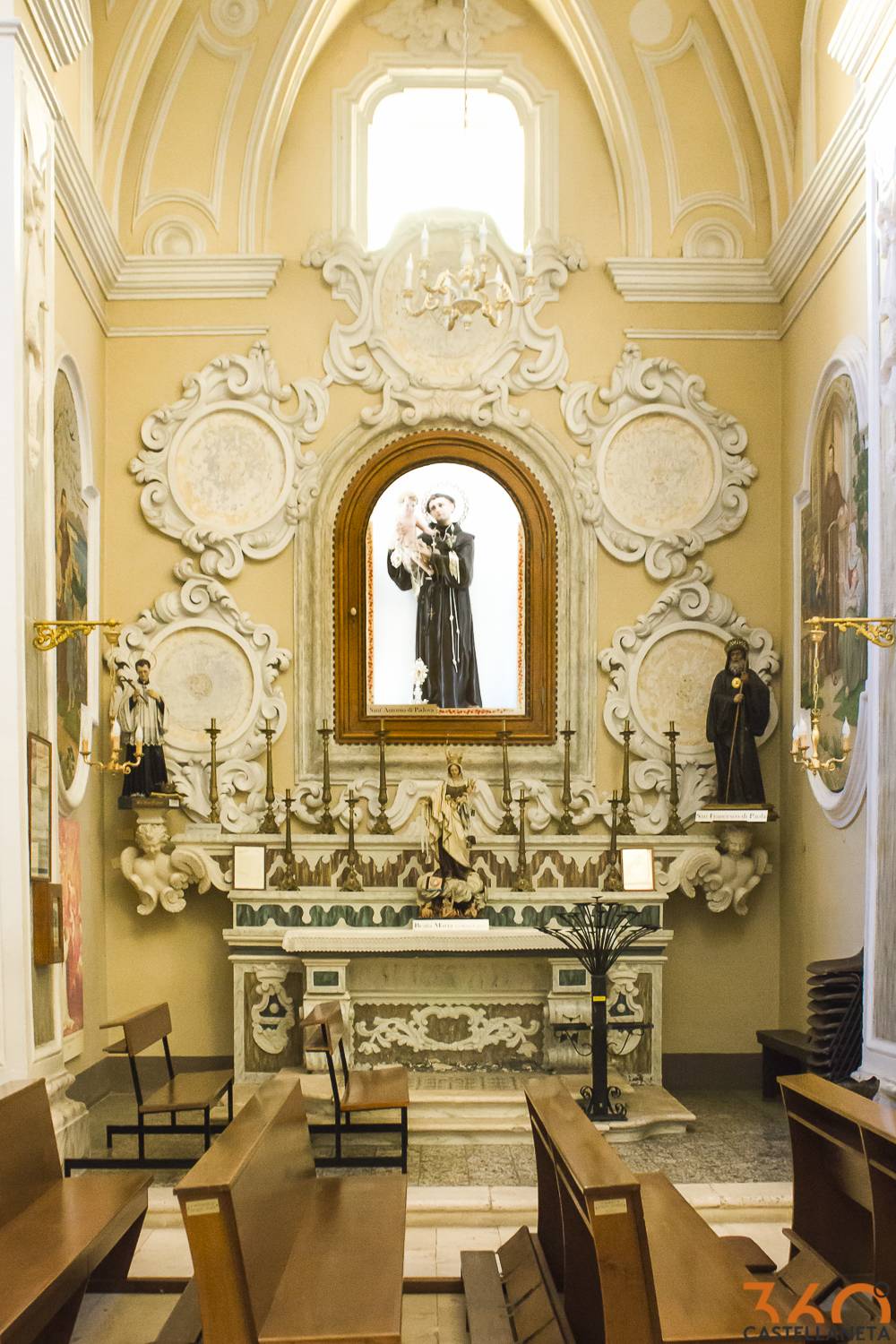
The second chapel is dedicated to St. Anthony. Built to be an aristocratic family chapel, with a stuccoed tuff altar and five round frames formerly enriched with paintings of saint Dominican abbots arranged in a circle around the main painting, it was first dedicated to St. Rose and in the 19th century to Our Lady of Mount Carmel.
The second chapel on the right was once dedicated to St. Joseph and characterized by a simple wall decoration and an altar renovated during the Fifties. Today it houses a wooden statue of St. Vincent Ferrer, patron saint of construction workers, carved in the 18th century and represented with the right arm raised and the left leg on a globe, clad in the Dominican habit. Below an angel brings a book with the inscription “TIMETE DEUM ET DATE ILLI HONOREM” (Fear the Lord, and give him honour), a verse from the Apocalypse of St. John.
Third Interior
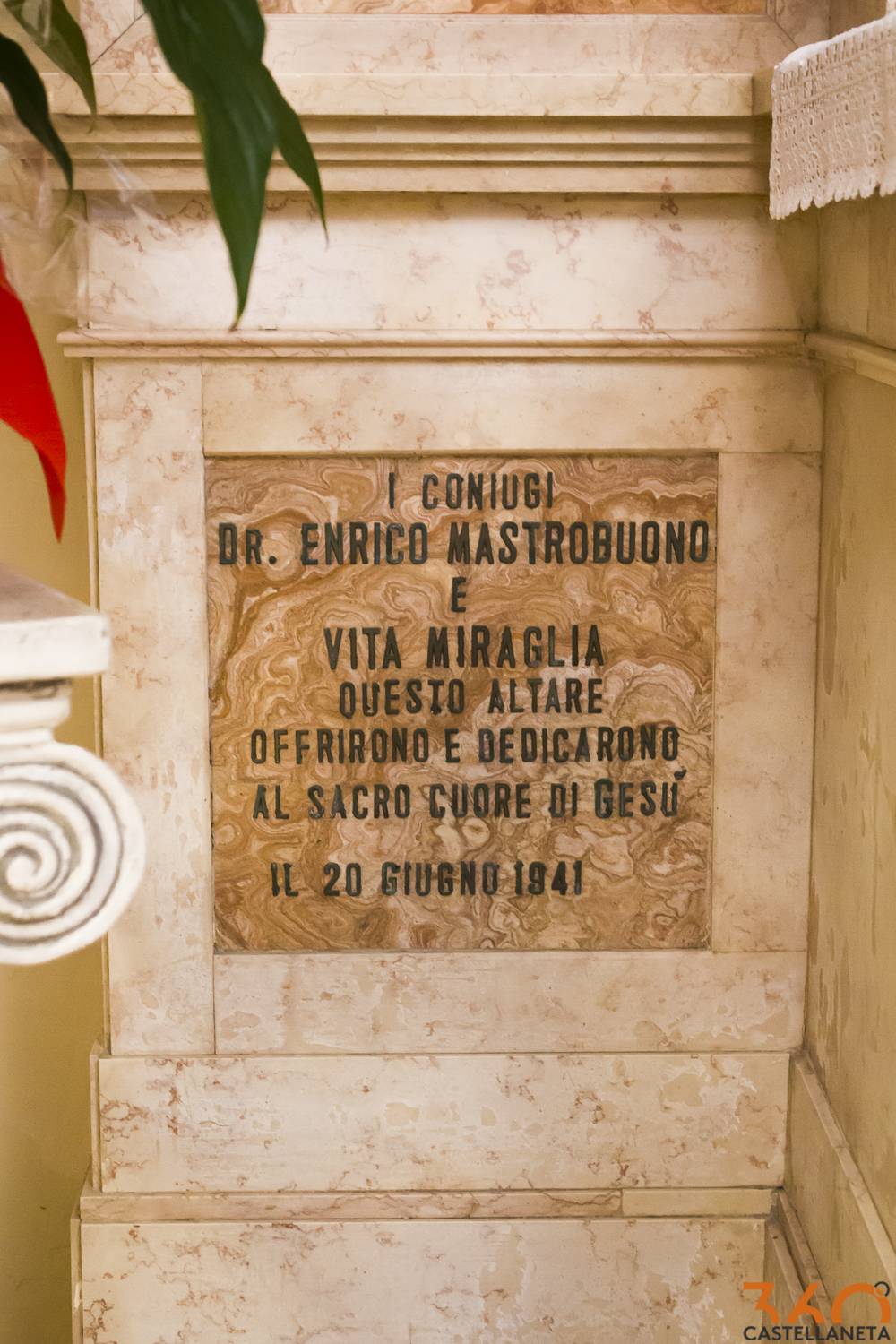
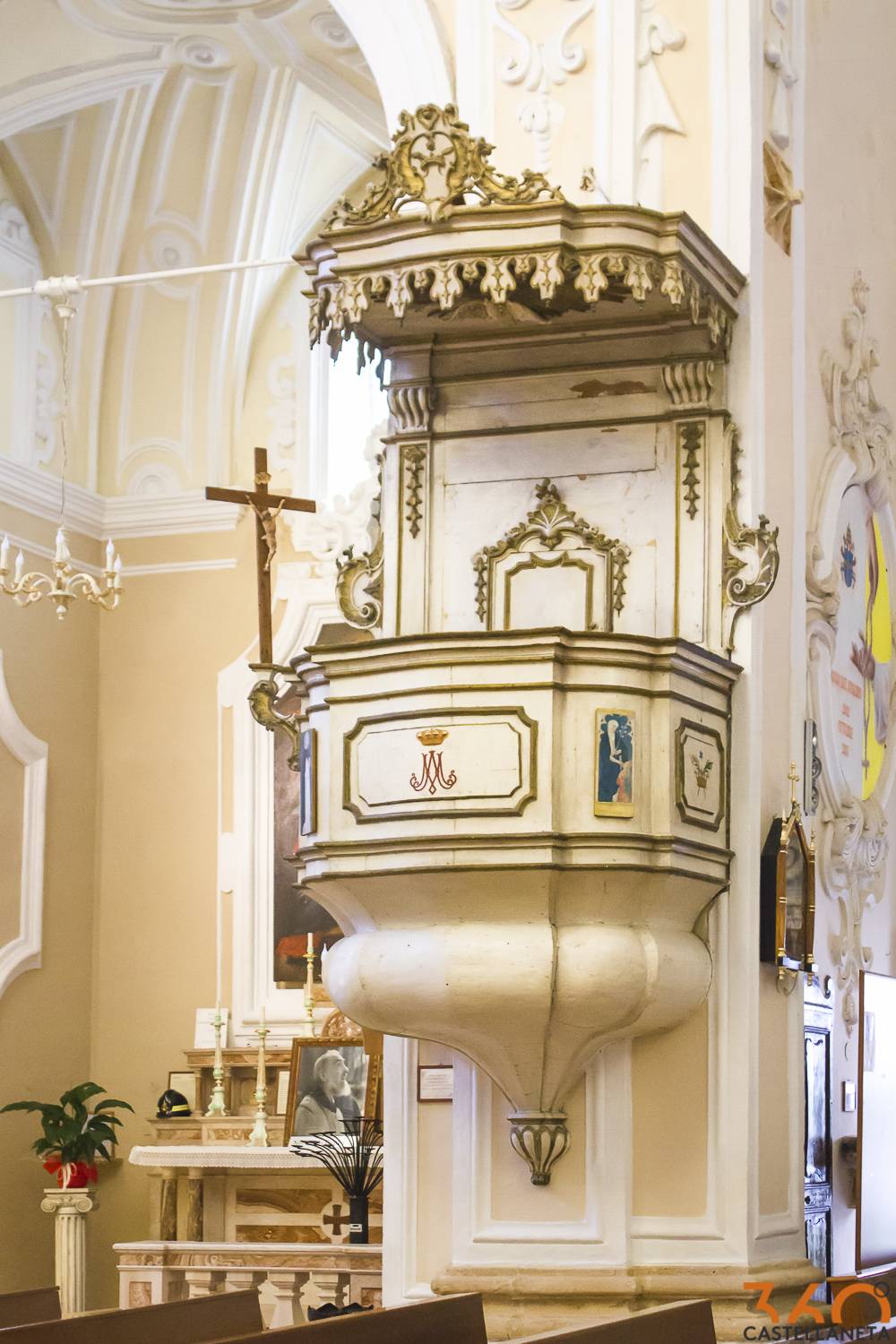
The third chapel was completely renovated in 1941 and dedicated to the Sacred Heart of Jesus, while in the past it belonged to Our Lady of the Annunciation. In this side of the nave, you can also find the original wooden pulpit.
Baroque painting of the Annunciation, dating back to the end of the 17th century. On a picturesque background, the archangel Gabriel gives a lily to the Virgin kneeling in prayer, surrounded by angels and the dove of the Holy Spirit.
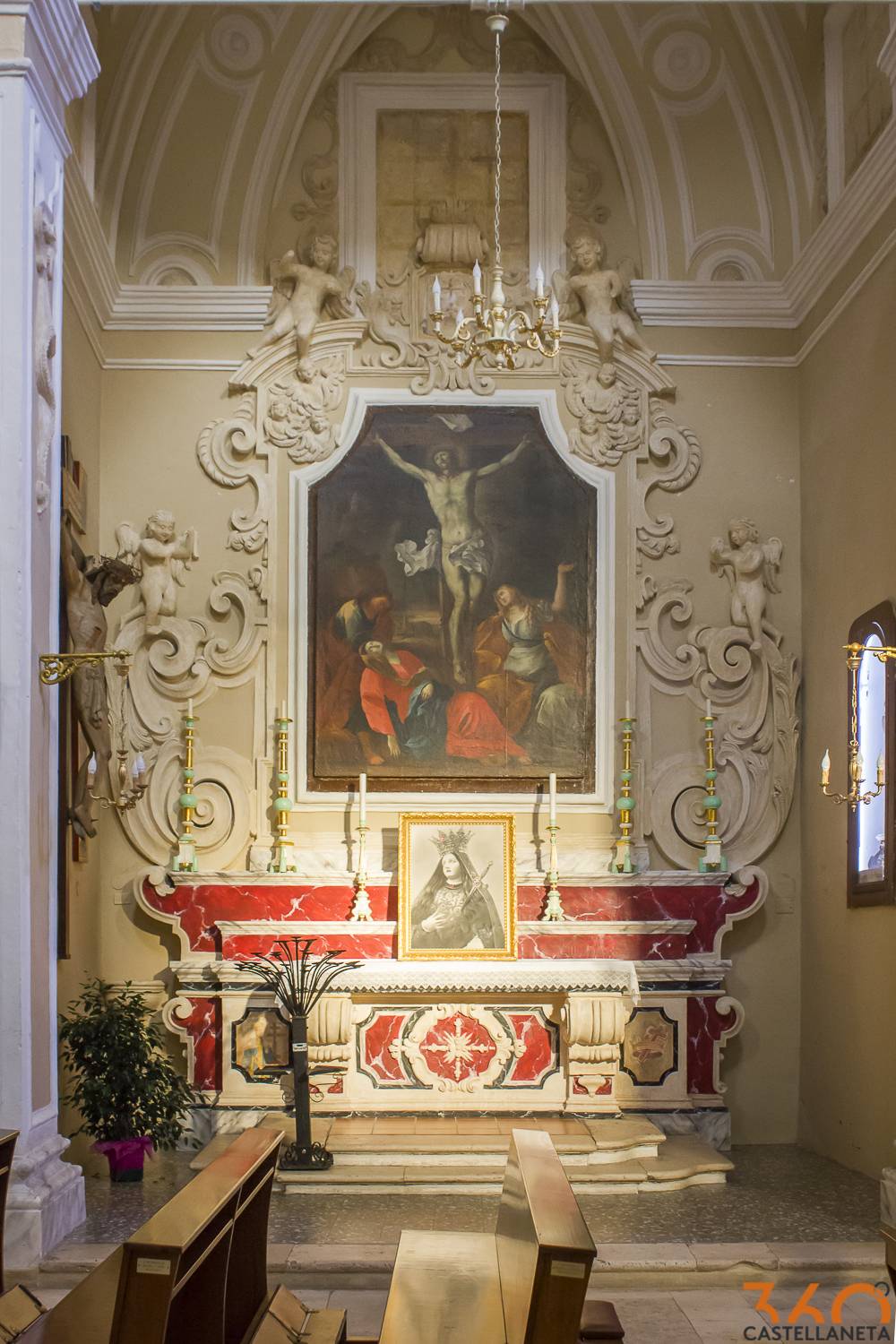
On the right, the altar of the Crucifix in coloured plaster, enriched by a wooden crucifix of the 15th century modified with additions in papier-mâché.
Painting depicting the Crucifixion, according to an iconographic structure typical of the Apulian painting experience of the late 17th century.
The painting on the main entrance depicts the Miracle of Soriano: according to the legend, in 1530 a Dominican friar from Soriano, in Calabria, saw the Virgin in dream. She was followed by Mary Magdalene and Saint Catherine of Alexandria, and they brought him as a gift a portrait of St. Dominic with miraculous properties which, to his surprise, was really in his cell when he woke up. The Virgin in the centre of the composition holds the painting with both hands, with Mary Magdalene and Saint Catherine depicted on the left and on the right. The Dominican friar supports the edge, kneeling in profile. Below there is the donor’s bust, in seventeenth-century clothes.
Fourth scene, inside
On the left in the transept you can find the painted stucco altar of Our Lady of the Rosary, where two lateral columns surmounted by a broken tympanum frame the niche containing a wooden statue and previously a painting, now in the middle of the choir. On this side there is also a service entrance and the sacristy.
On the right side of the altar, a niche once housed the wooden statue of St. Vincent Ferrer, dating back to the 18th century and now found in the second chapel on the right.
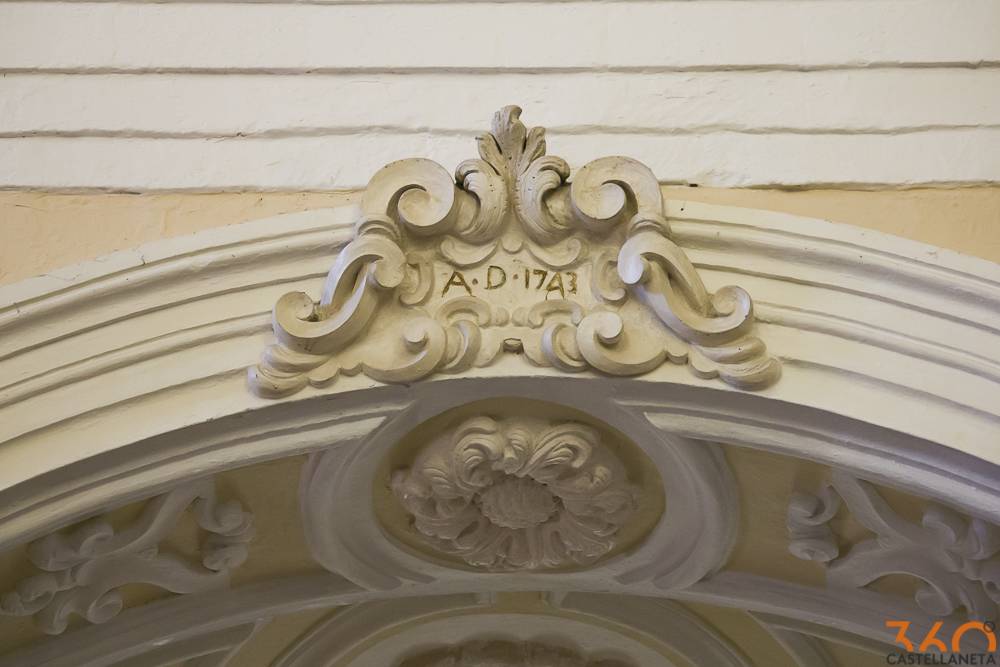
A triumphal arch decorated with palmettes surmounts the apse and choir.
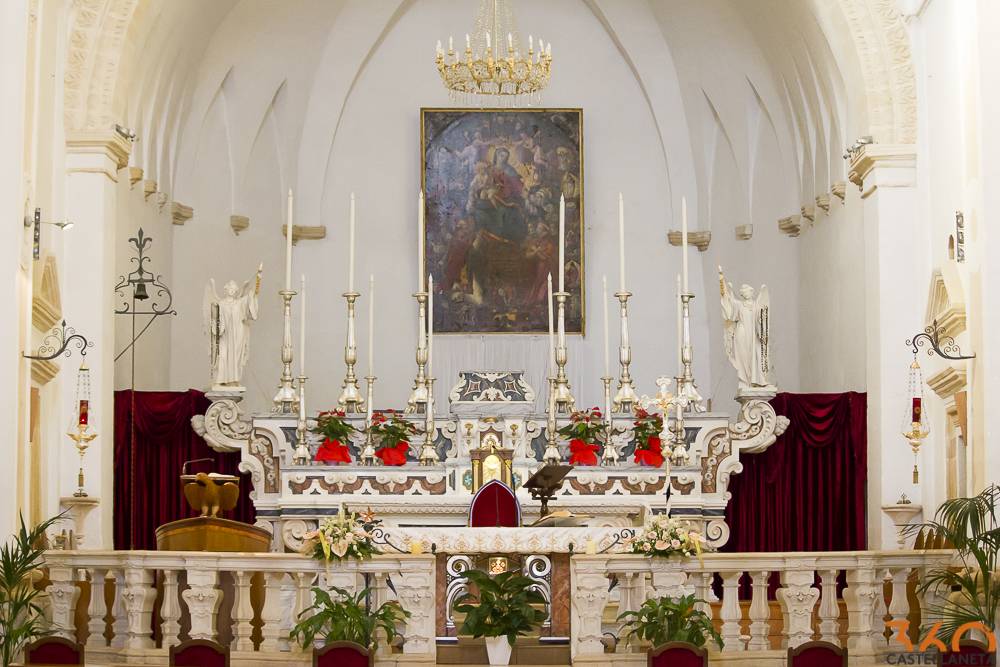
The presbytery has a stone balustrade. On the sides of the Baroque high altar there are two volutes and angel-shaped torch holders that come from an old war memorial built by Raffaele Caretta from Lecce at the request of the Confraternity of the Rosary. He is also the painter of all the Stations of the Cross of the church.
On the left a plaque commemorates the granting of privileges and plenary indulgence to the altar in 1727 by Pope Benedict XIII, member of the Dominican order, “BENEDICTUS XIII EX ORD.NE PRAEDICATORUM / AD PERENNE SUAE RELIGIONIS DECUS SUI NOMINIS / IMMORTALITATEM & DEI GLORIAE / CELSITUDINEM / OMNIA HUCUSQUE SUIS A PRAEDECESSORIBUS / PRAEDICTO ORDINI INDULTA PRIVILEGIA AUXIT / CONFIRMAVIT ALIAQUE PROFUSA LIBERALITATE / CONCESSIT / INTERQUE CEDRO DIGNA JURISDICTIONES / PLENARIAS INDULGENTIAS CUNCTIS ALTARIBUS / SINGULISQ. FRATRIBUS / IMUNITATES EXEPTIONES AC IMEDIATAM SUBIECTNEM / SANCTAE SEDI ELARGITUS EST / CUM QUA OPUS SACRAMENTO FIRMATUM / DE NON REVOCANDO INUIT / ANNO A PARTU VIRGINIS MDCCXXVII / QUA DE RE FR. AUGUSTINUS DE SALVATORE / HUIUS PROV.AE MAG.ER PRO.LIS AETERNITATI / CONSULENS”. “TITULUM / TEMPORIS INIURIA LABEFACTUM / BMV ROSARII CONFRATRES / ARS MDCCCXCII INSTAURANDUM / CURARUNT”.
In the centre of the choir the painting of Our Lady of the Rosary. It is attributed to Gianserio Strafella and dates back to 1571, the year of the Battle of Lepanto, when the fleet of the Holy League defeated the Turkish fleet, a victory linked to the feast of Our Lady of the Rosary. The painting, full of characters including Pope Pius V, King Philip II, Catherine of Austria, a bishop, a cardinal, the hooded monks and some devotees, is faithful to the classic iconography of the Virgin’s delivery of the rosary to the saints Dominic and Catherine of Siena. The composition is surrounded by fifteen ovals containing the mysteries of the Rosary. In the middle of the lower part there is the inscription: “PURPUREAS PREBETE / ROSAS FLORESQ. MARIAE / UT NOBIS…T…PREB.E A ILLA SUUM”.
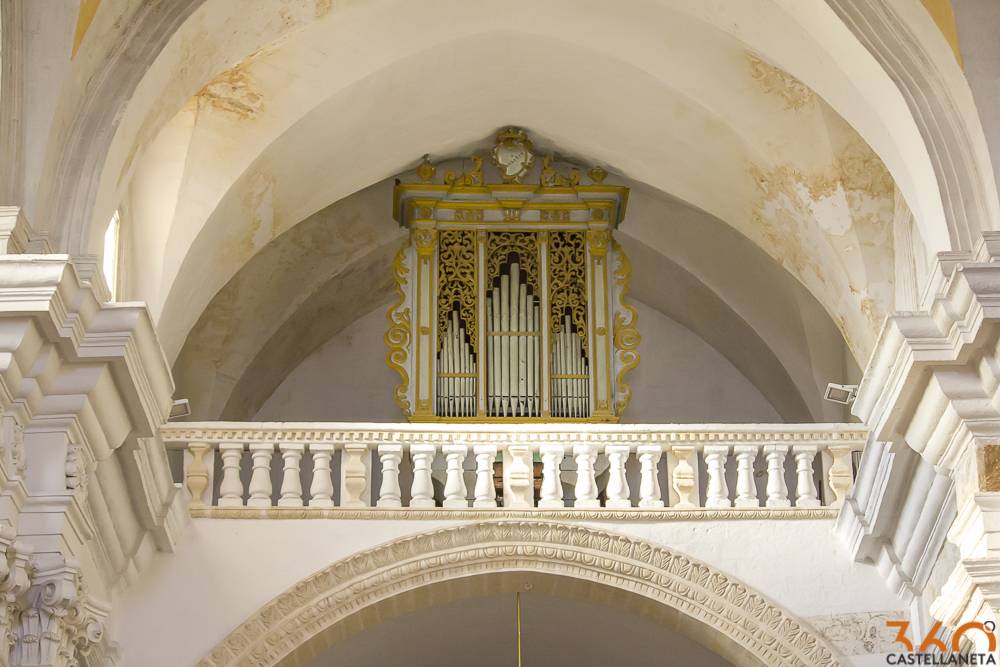
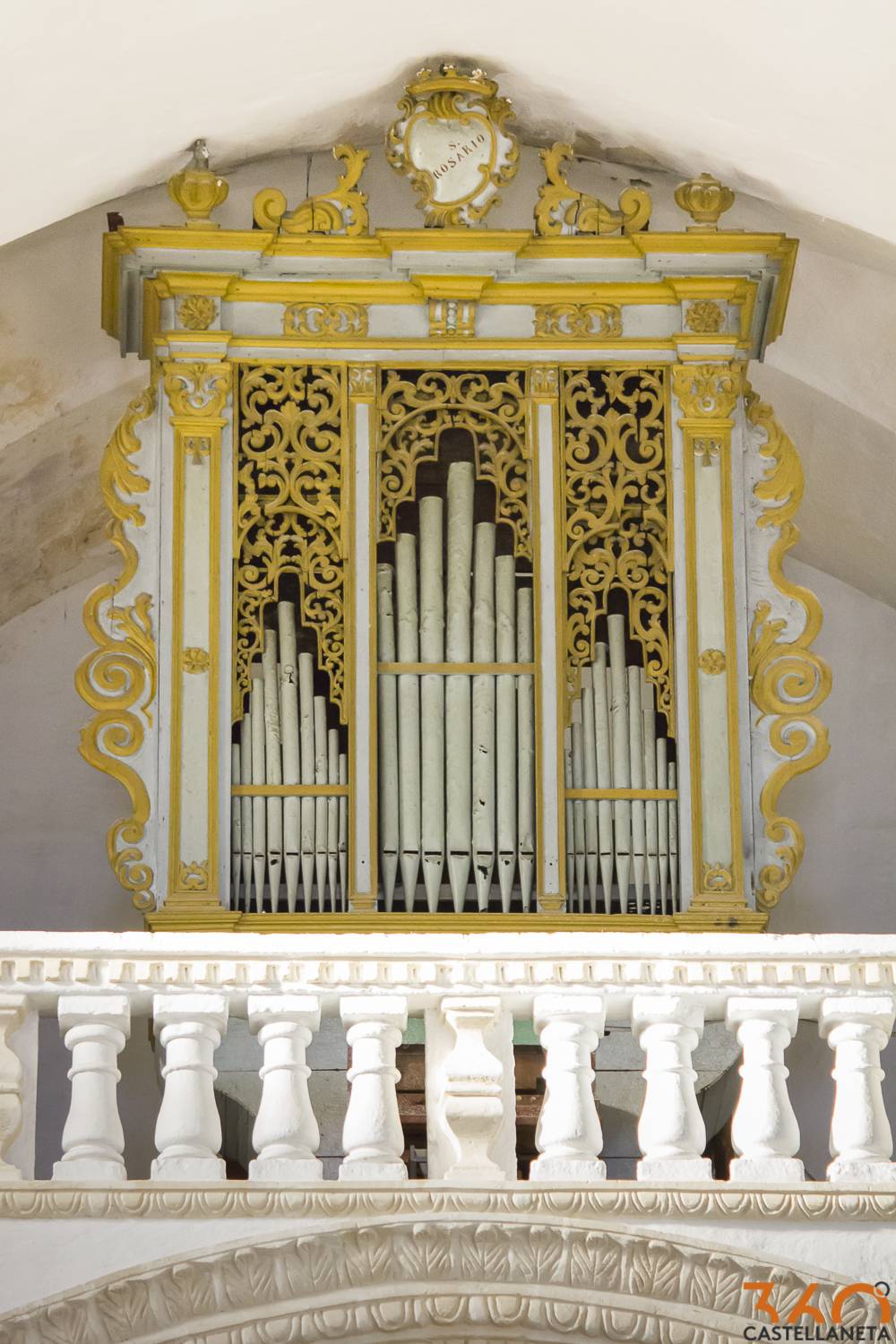
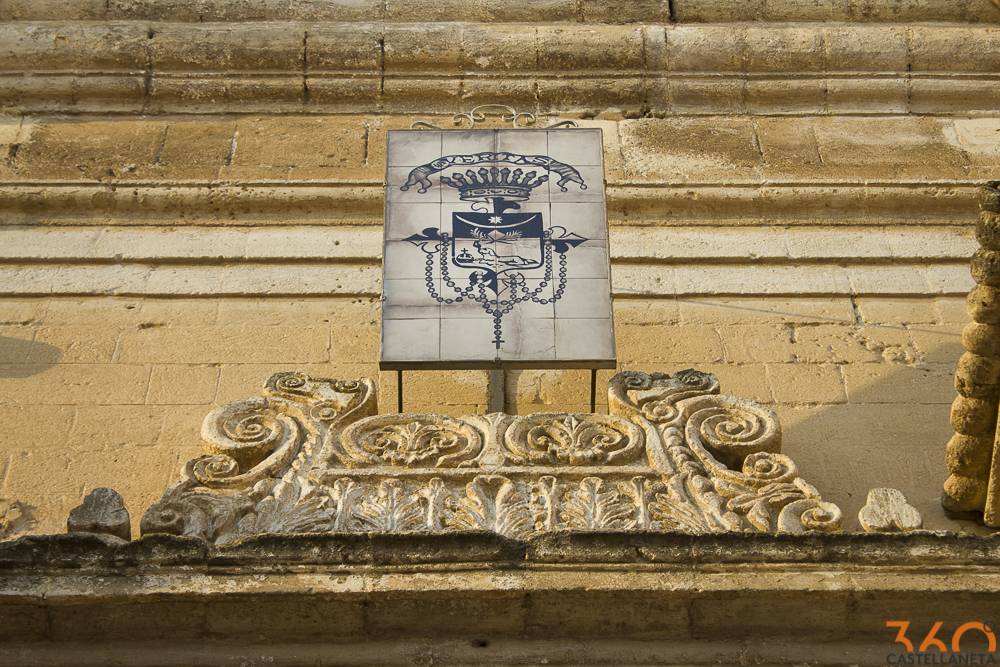
On the balustrade there is an organ consisting of twenty-five pipes and decorated by the emblem of the Brotherhood of the Rosary.
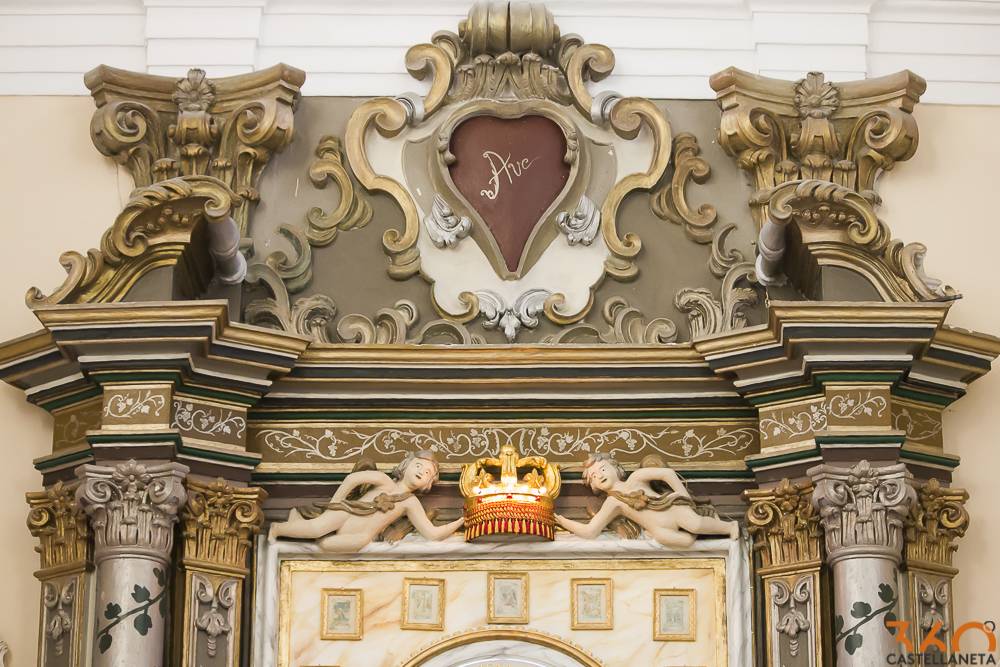
In the right side of the transept, the altar of St. Dominic is enriched by three columns on each side ending in a broken tympanum, featuring the image of the Eternal Father in the middle and framing the niche with the wooden statue of the saint.
Last tours
COMUNE DI CASTELLANETA