



Rupestrian church of St. Michael the Archangel
 See all tours
Rupestrian church of St. Michael the Archangel
360

Rupestrian church of St. Michael the Archangel
Year of construction IX-X secolo
AddressGravina di S. Stefano
Coordinates40.614363,16.918035
Rupestrian church
- Share on



Rupestrian church of St. Michael the Archangel
Exterior
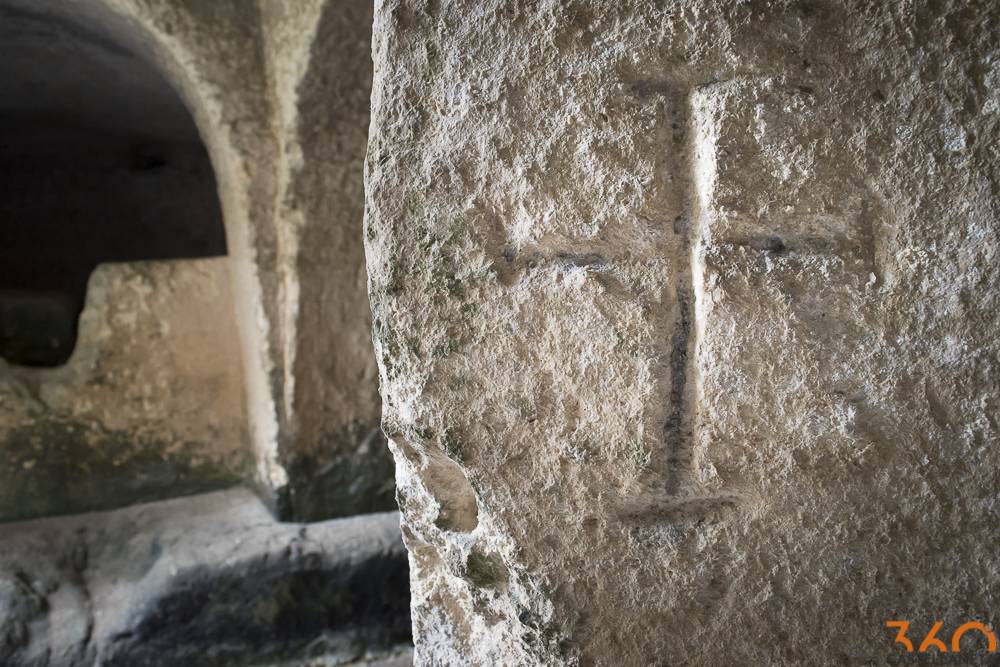
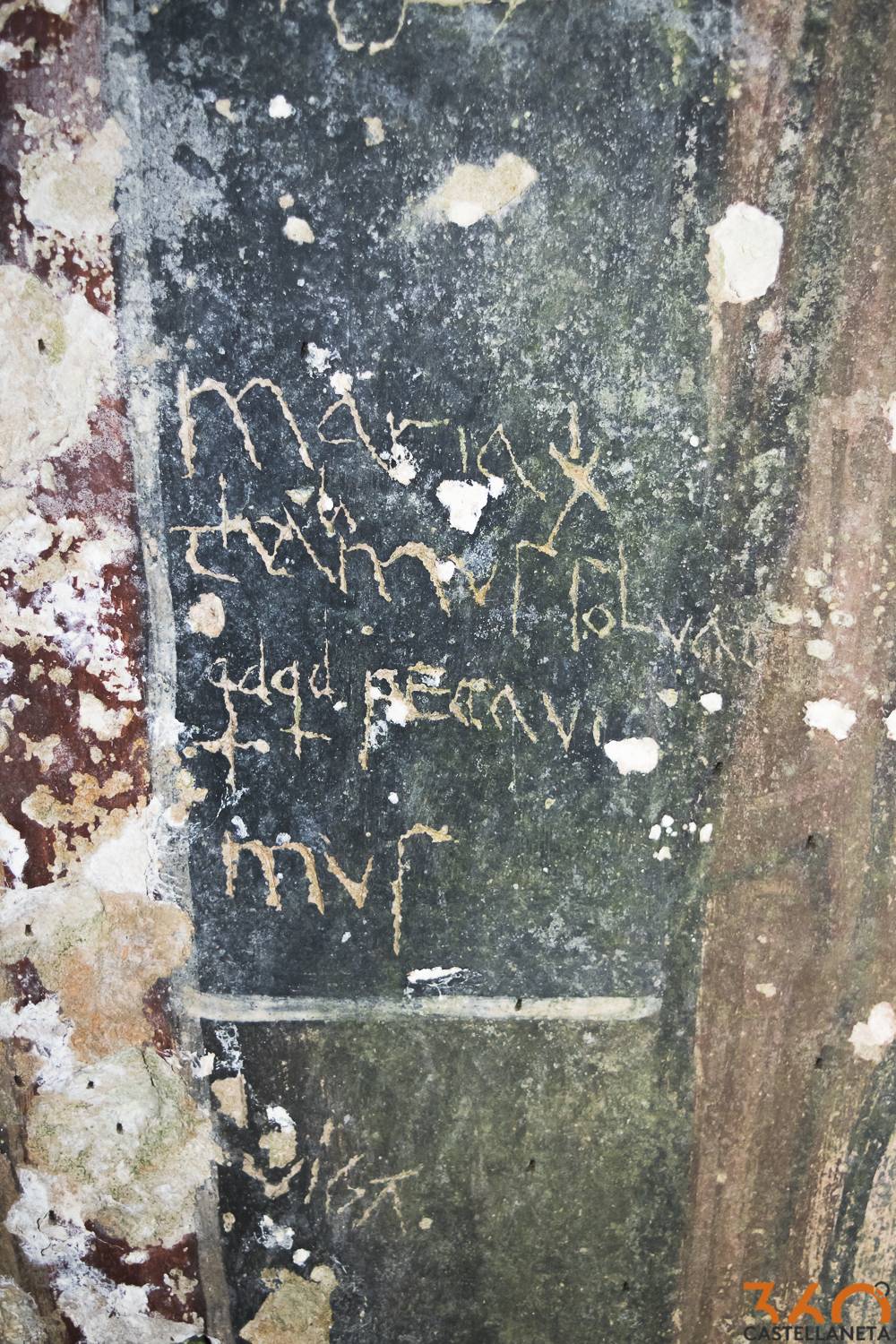
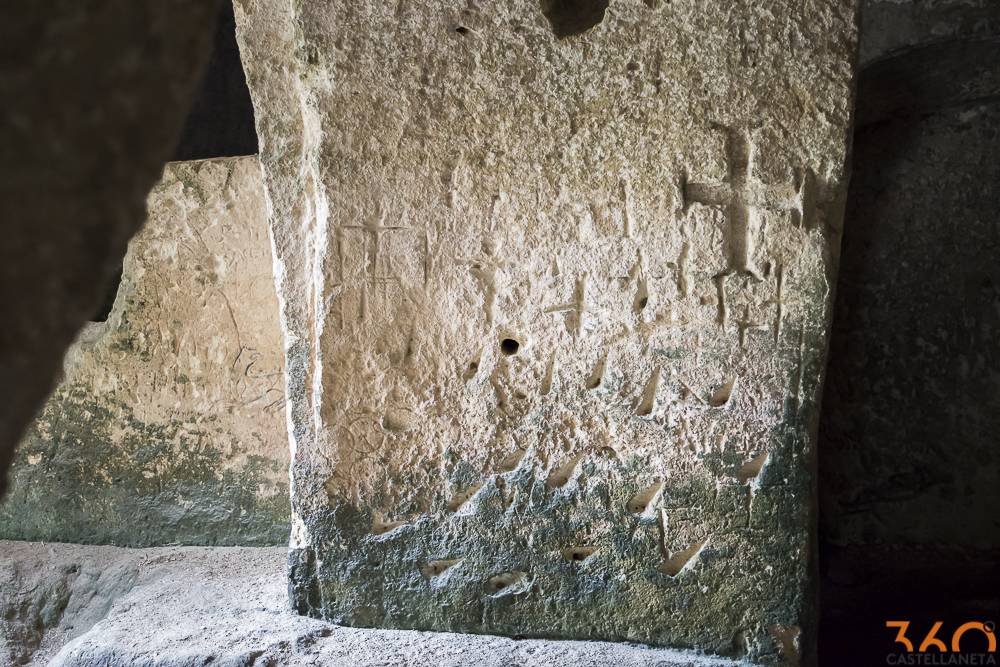
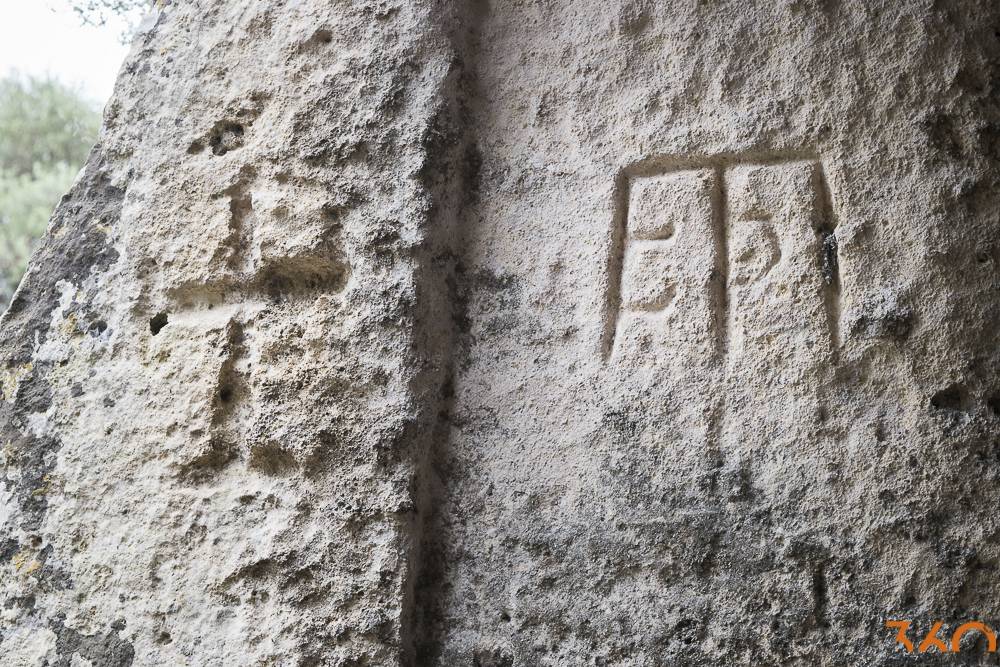
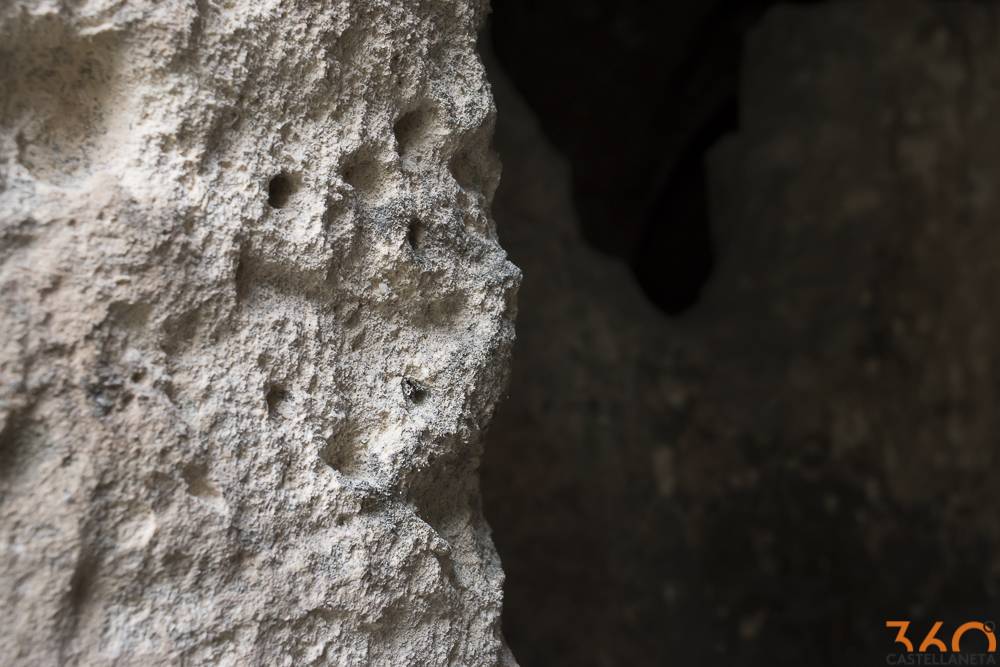
Characterized by a rectangular entrance without lunette, well hidden by the Mediterranean scrub, this rupestrian church overlooks the ravine and it is located at about 500 meters from the crypt of St. Stephen, on the same ridge and not far from the ancient route of the Appian Way. Due to the isolated position and the numerous inscriptions, many of which are invocations to the Virgin, it is believed that this crypt, dug around the 9th-10th century, was a sanctuary for pilgrimage and then a hiding place for brigands. On the right outside the crypt there is a rectangular niche of unknown purpose.
Inside scene
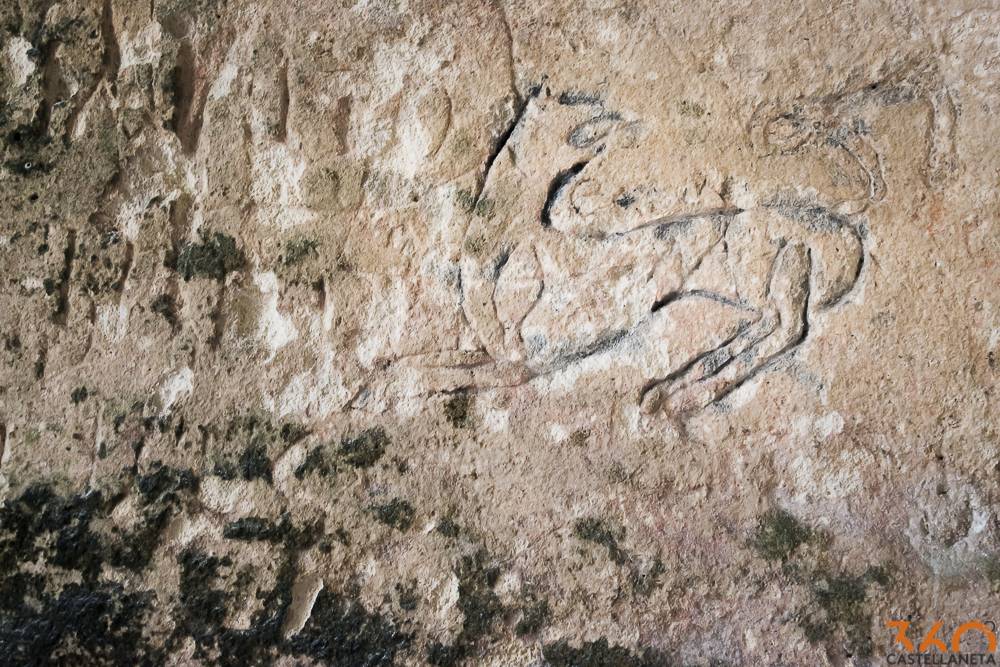
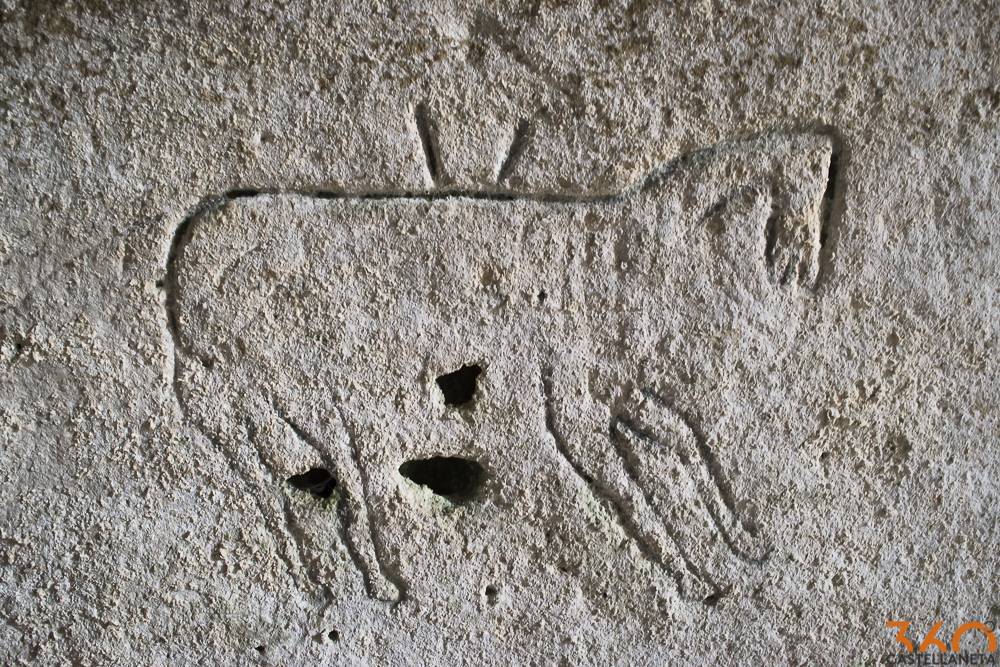
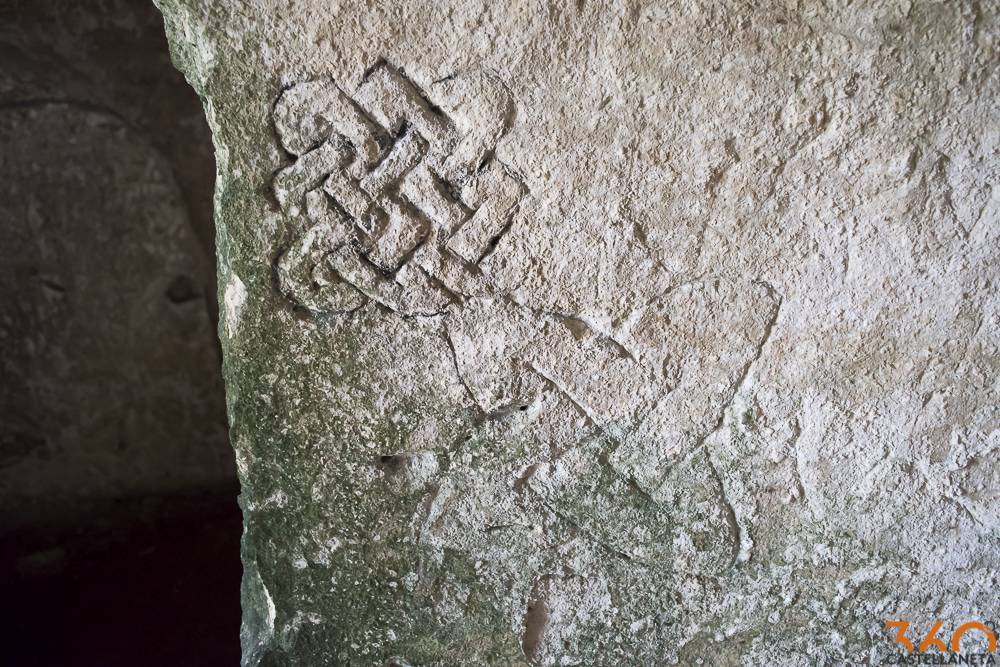
This crypt, characterized by a trapezoidal plan, has three naves and four niches in the front wall plus a fifth on the left. The apse, in order to respect the liturgical orientation to the East, is to the left of the entrance and occupies almost half of the side aisle (which coincides with the presbytery). It is separated from the central nave by an iconostatic wall called pluteus that bears several graffiti including a lion, symbol of Christ during the Middle Ages. The altar is not entirely attached to the wall and it includes a small stone seat.
Paintings
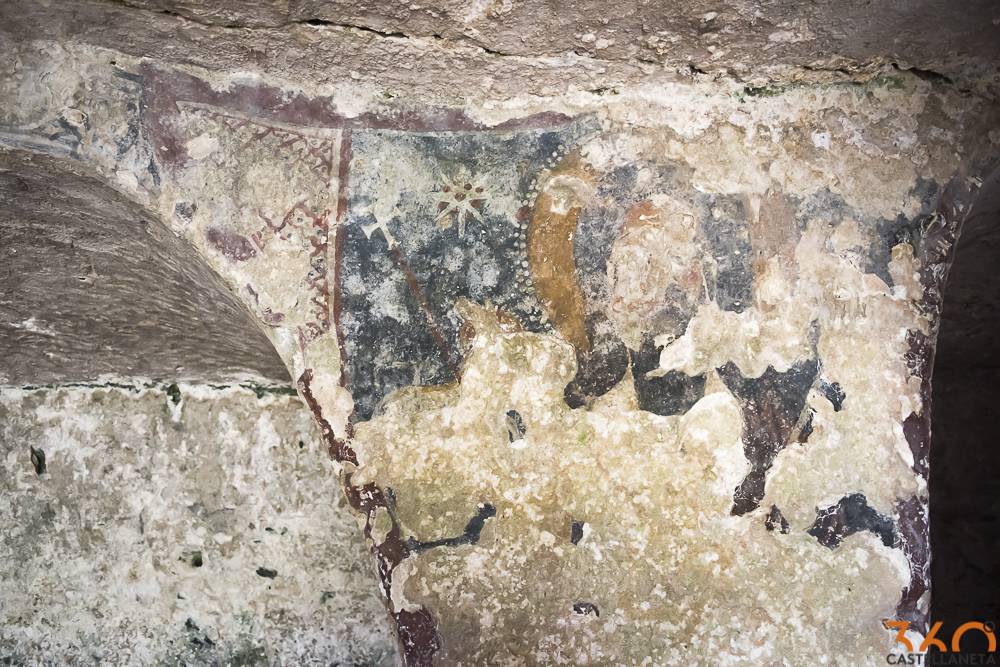
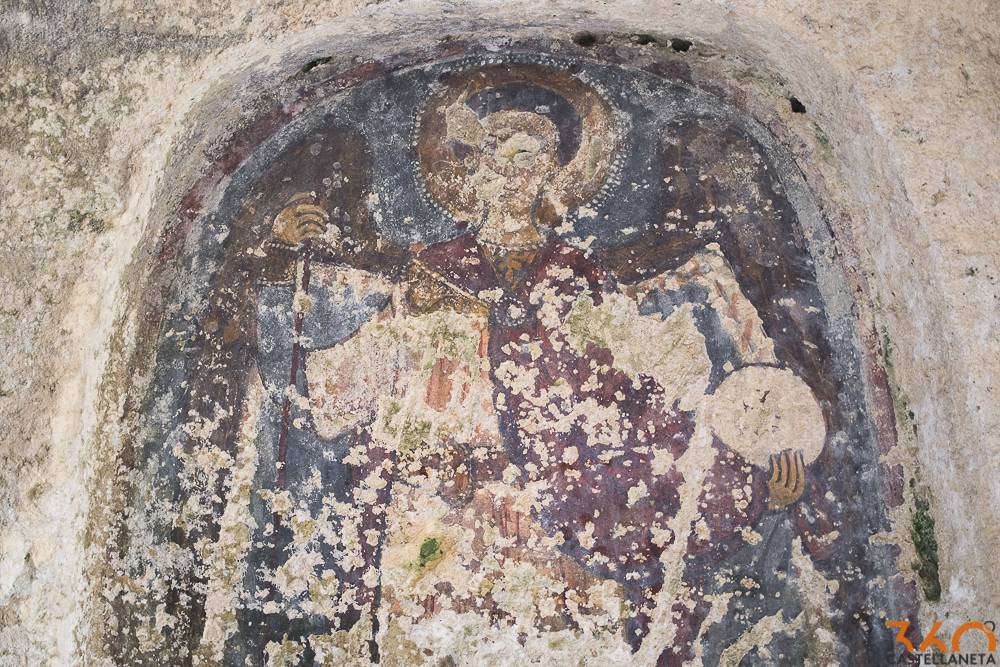
Entering the crypt, on the right, you can find an Archangel (“Archistratigos”, or army general) on a blue background, faithful to the traditional canons of Byzantine iconography with a globe and a pole in hand and open wings to express majesty and self-confidence, both qualities of a protector of the Church. He wears a red cloak closed by a round chiselled clasp on a tunic tightened by a gold-embroidered belt. The face is disfigured by the lack of an eye. It dates back to an uncertain period between 1100 and 1200 and it is almost contemporary to the frescoes in the crypt of St. Stephen.
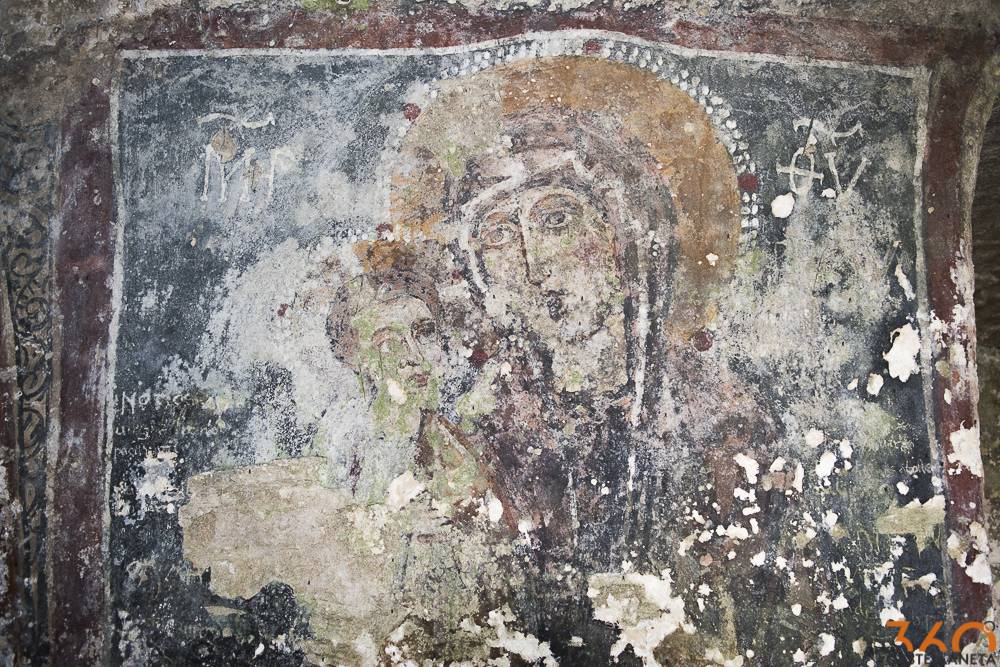
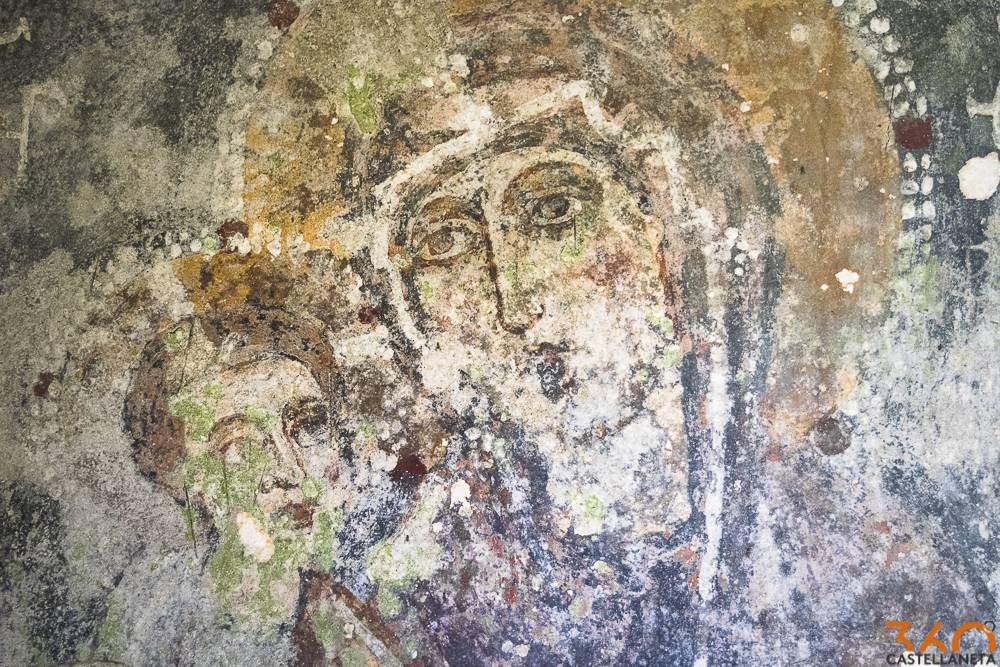
On the front wall there are two frescoes, one of the Virgin, the other of a Saint Abbot. The Virgin holds the Child in Her arms. On the sides of Her head, two Greek letters compose the exegetical inscription “Mother of God”. It dates back to the 14th century. The second fresco, perhaps St. Anthony the Abbot or St. Benedict, may date back to a later pictorial cycle. The saint has a long and thin stick in its hand ending with a Greek lobed cross and a star formed by a Greek cross on a cross of St. Andrew.
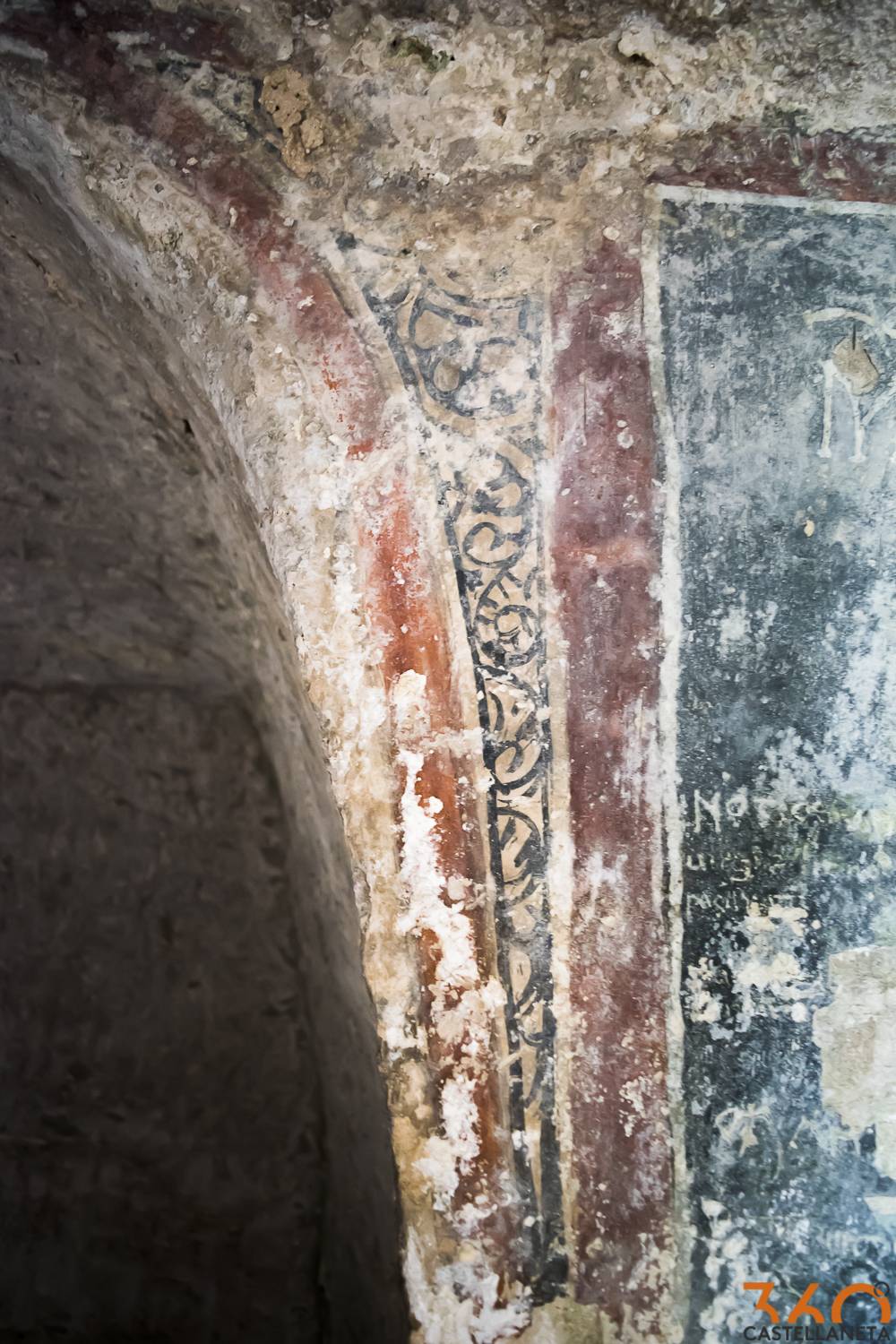
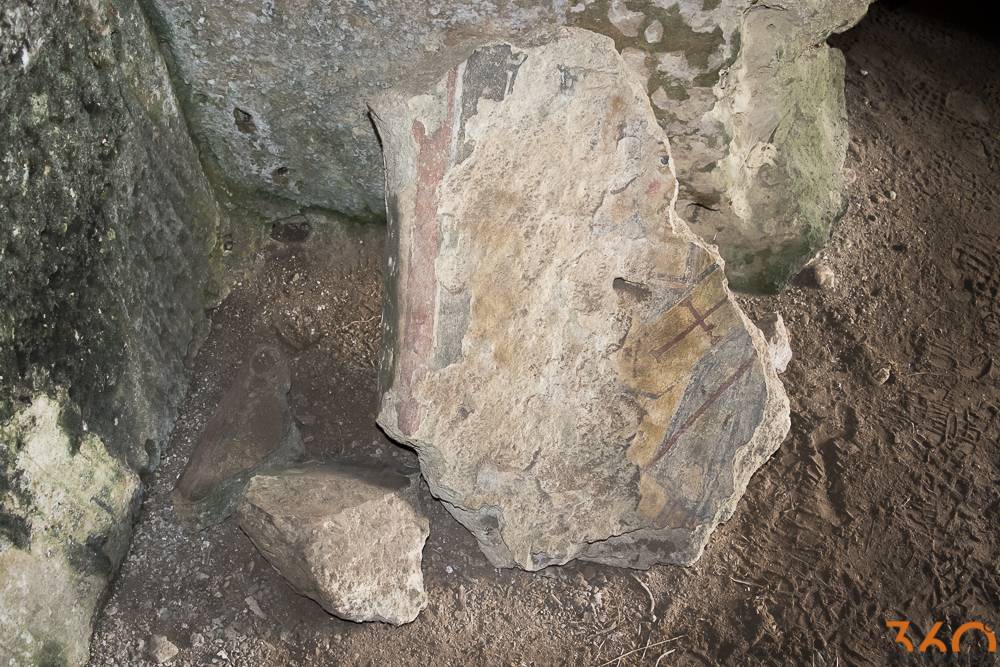
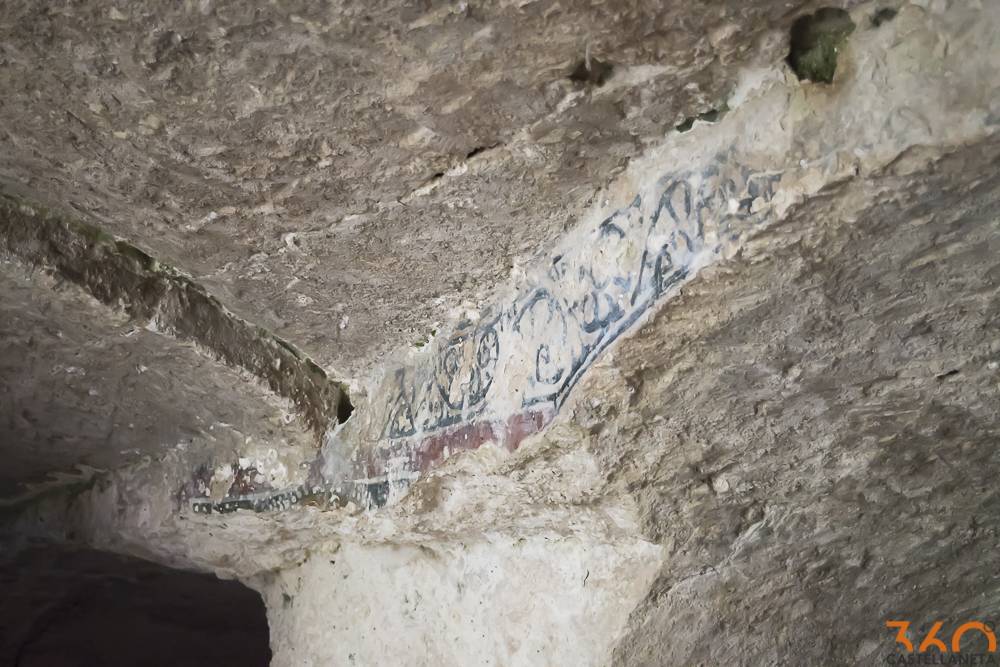
On the left of the Abbot there is a third pillar with the upper part decorated. The fresco it housed was detached, but a part remains in the crypt, on the ground.
This epigraph, engraved on the right wall: «IAQUINTUS FECIT HOC SERIPANDI BONIS…» translated by dr. Roberto Caprara: “Giaquinto (the architect) did this (church) with the goods of Seripando …” explains the origin of the crypt: Giovannotto Seripando, the donor, was a member of an ancient Neapolitan family and in 1344 he was appointed Chancellor of the Prince Roberto D’Angiò, who rewarded his merits with gold and feuds in the Taranto area.
Last tours
COMUNE DI CASTELLANETA