



Church and convent of Saint Francis of Assisi
 See all tours
Church and convent of Saint Francis of Assisi
360
Church and convent of Saint Francis of Assisi
Year of construction 1463
AddressVia San Francesco, 138
Coordinates40.6266199,16.92205880000006
Church and convent
- Share on



Church and convent of Saint Francis of Assisi
Via San Francesco, 138
Exterior
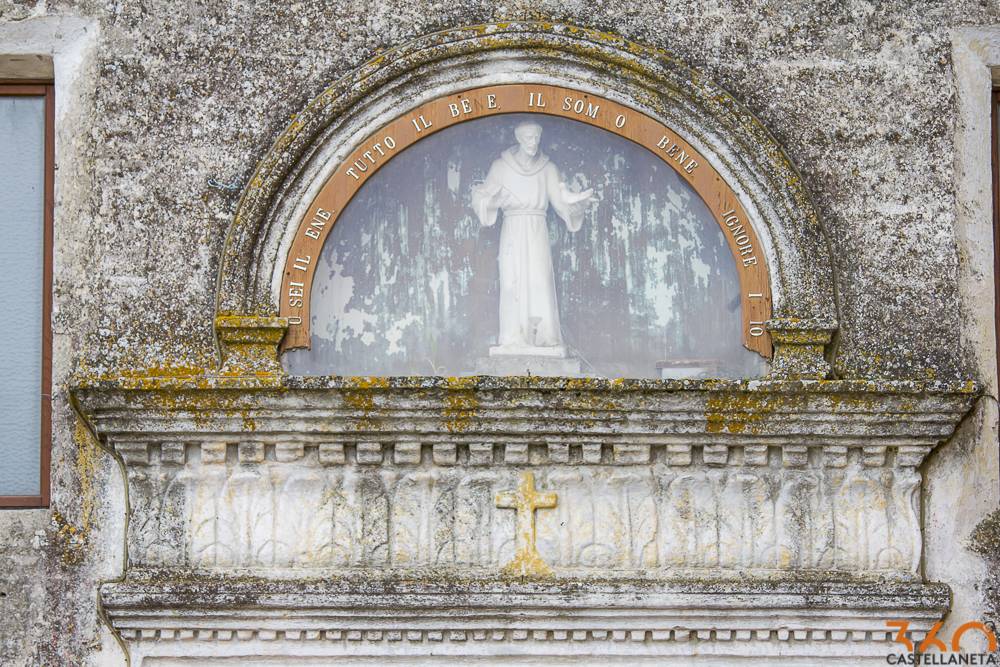
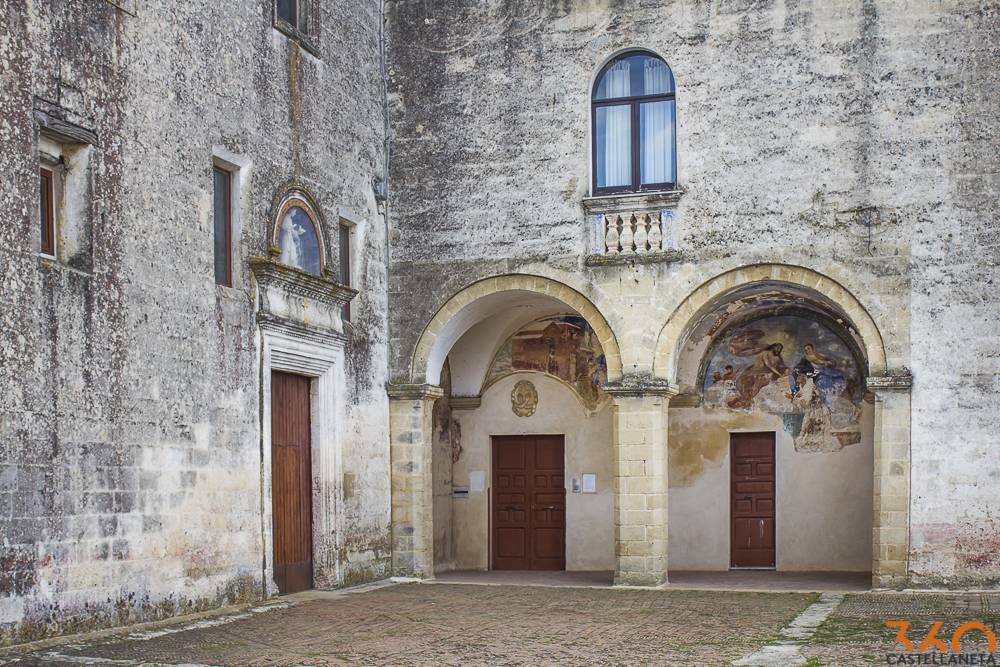
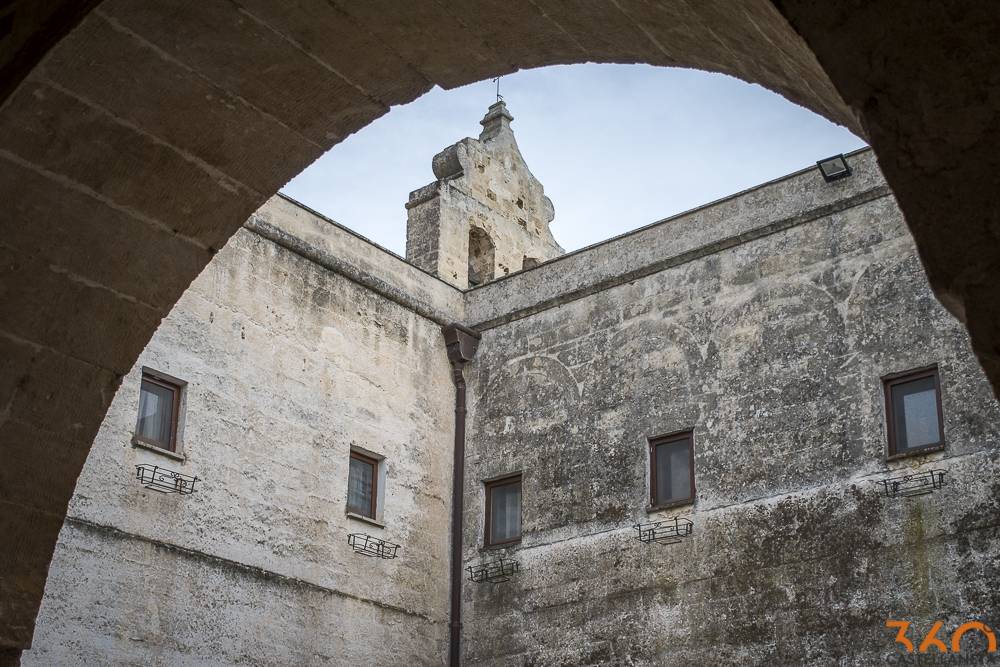
Situated in contrada Fontanelle, so called due to the presence of numerous wells and natural springs, originally the complex was a mile away from the old city centre. The church, completed in 1463, was built with the economic contribution of the citizens and of the University of Castellaneta and subjected in the course of time to various renovations and enlargements. The facade of the church has a flat top with pinnacles and a single portal with lunette and some windows from different eras. The profile of the convent is characterized on the right by a portico in the lower order and a loggia in the upper one.
The convent, founded in 1471, has grown over time thanks to the commitment of the community of friars, despite periods of adverse fortune that led to its suppression due to the Napoleonic laws and after the Italian Unification. It was returned to the friars in 1896 by the Franciscan bishop Giocondo de Nittis and later confiscated for military use during the First and Second World War.
Chapel of the Calvary, with altar and crucifix adorned with flowers and ex-voto: following the tradition, on the 13th of June the friars distribute here the bread of St. Anthony.
First interior scene
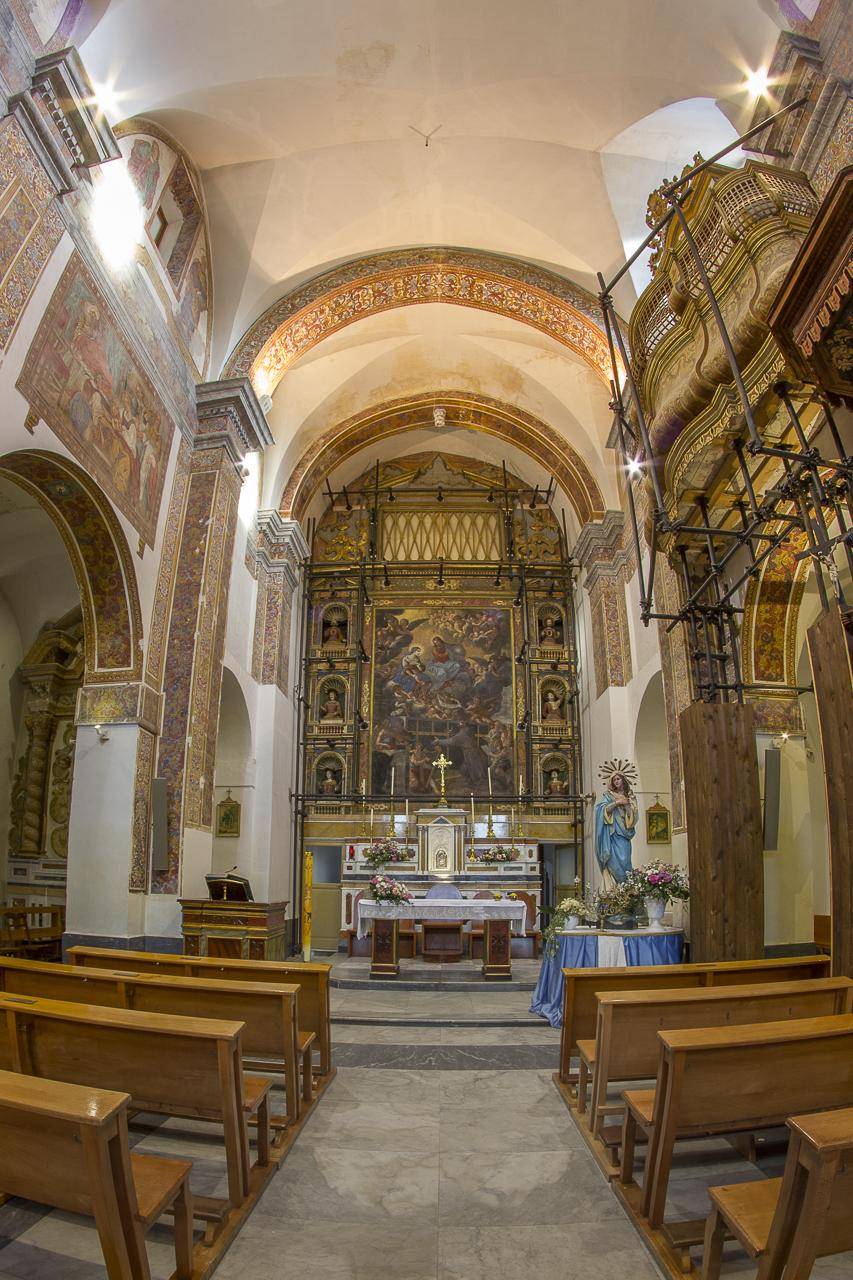
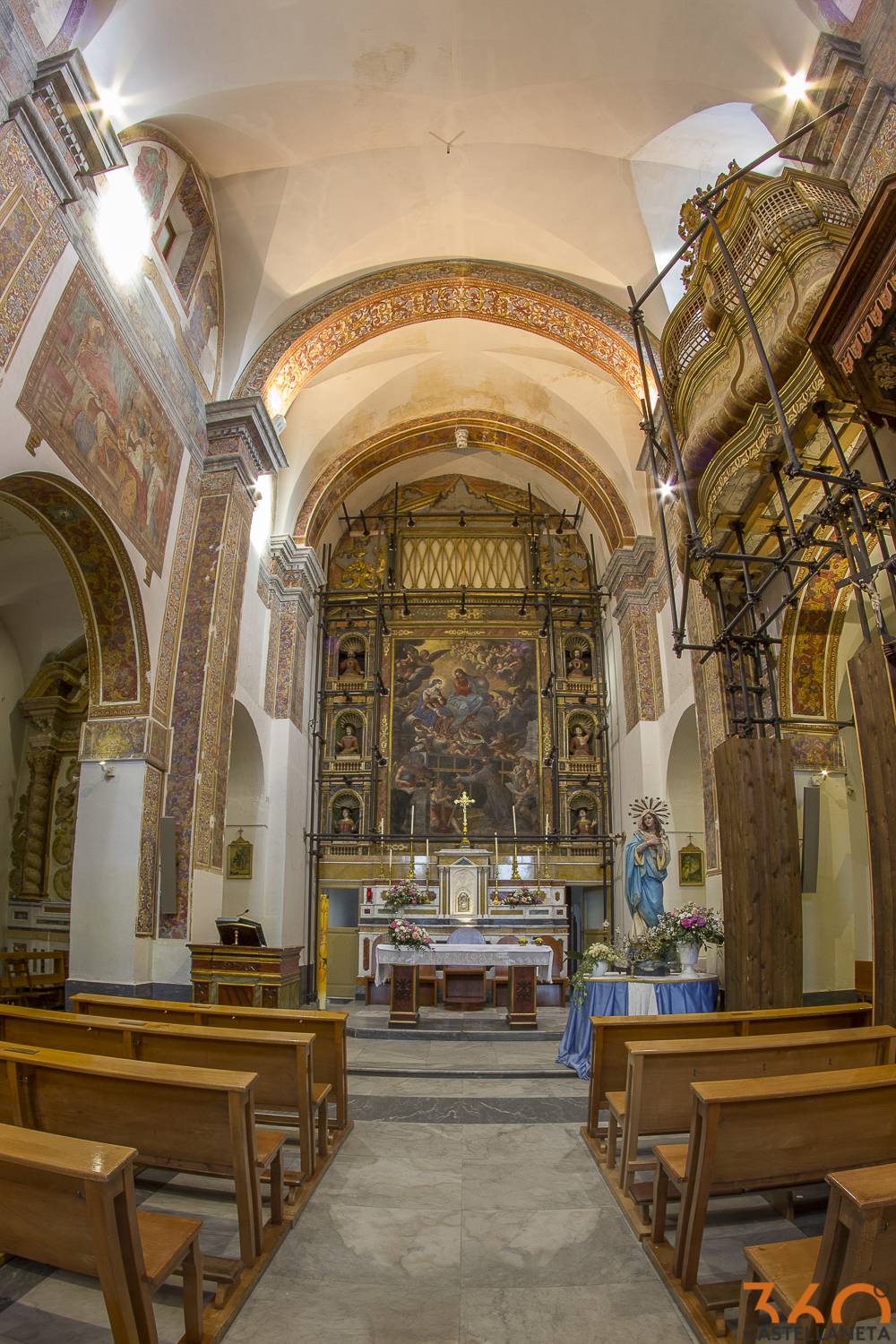
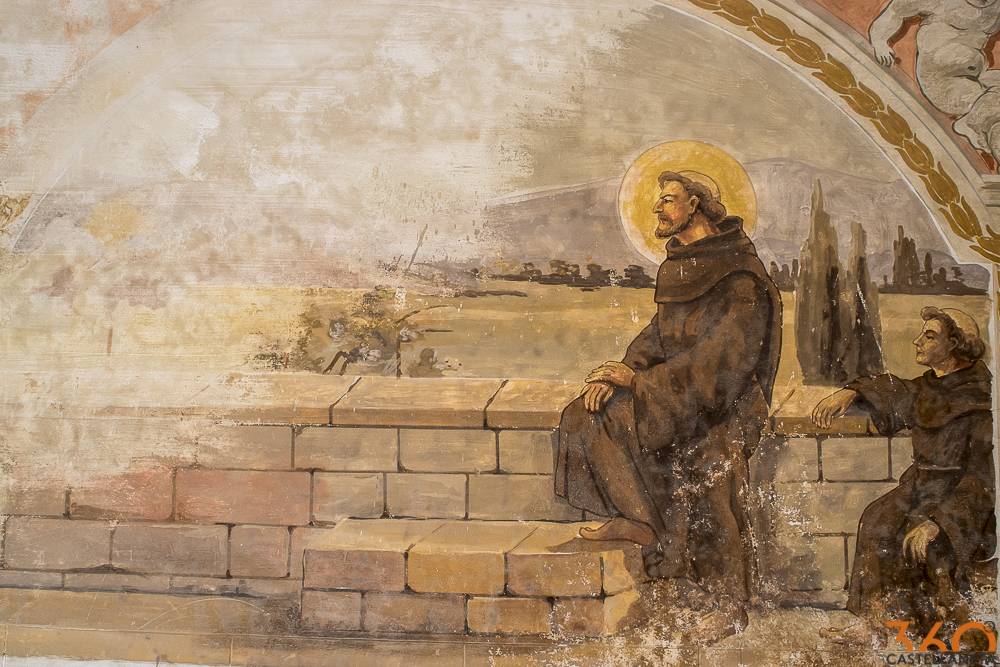
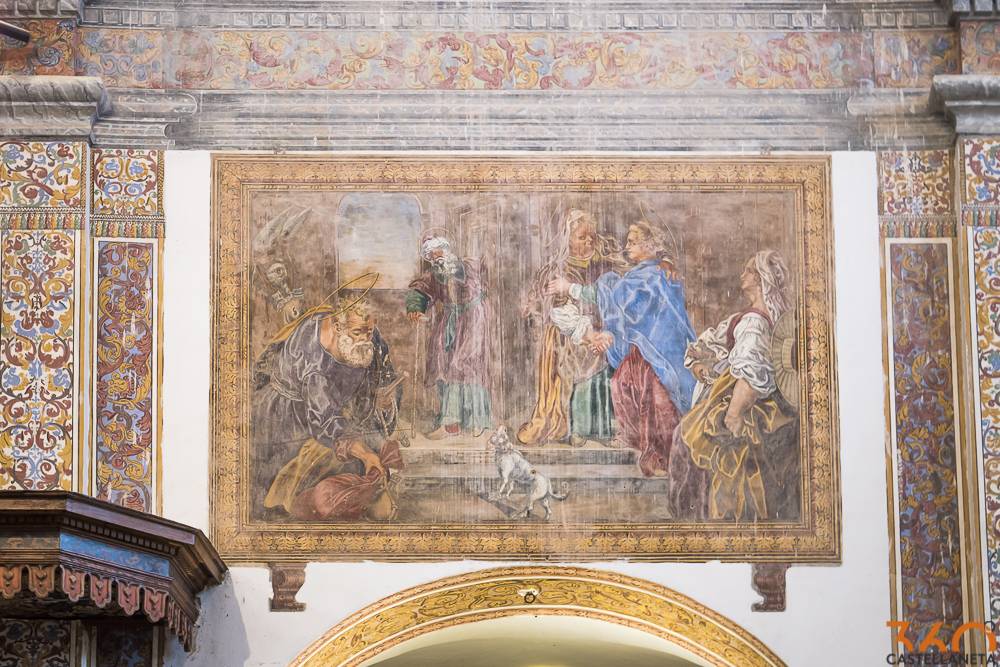
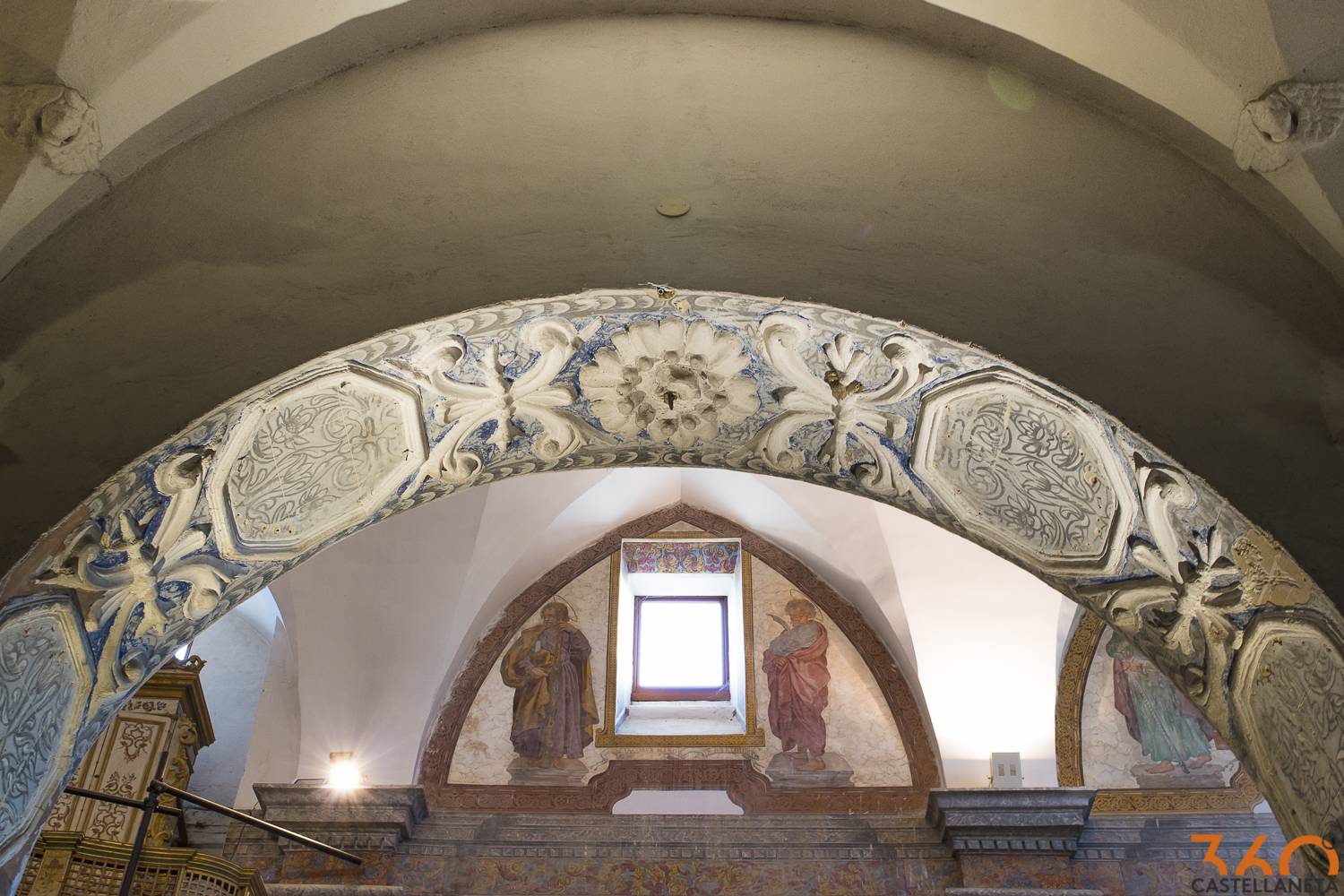
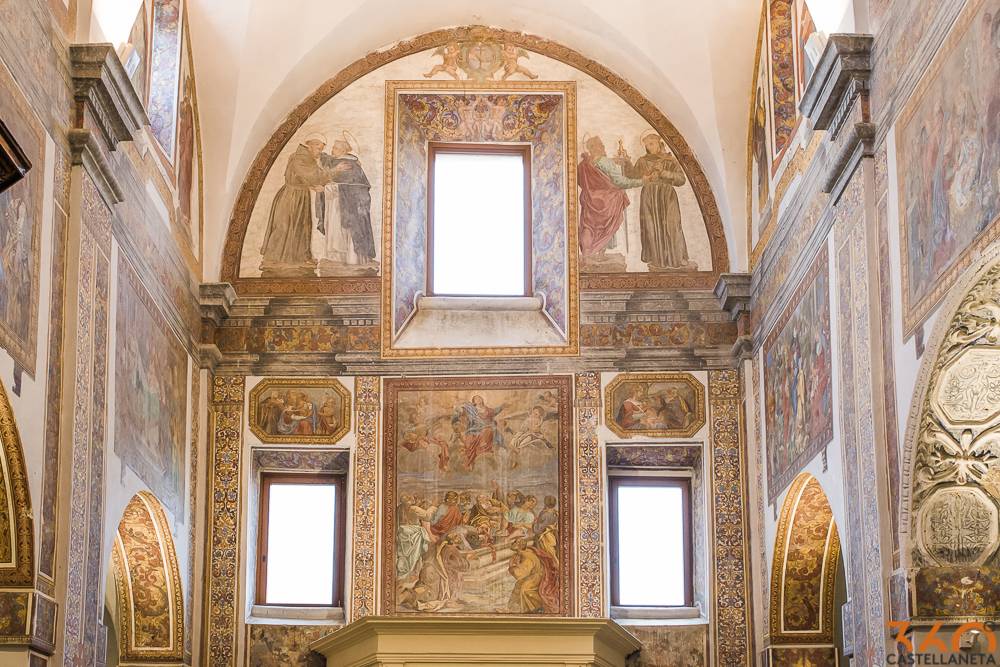
The walls of the church are almost completely frescoed: you can admire five panels painted above the arches of the nave, isolated figures in the upper spaces and, in the remaining surfaces, a complex vegetal decoration painted by the friar Ludovico da Gioia in 1708. The five panels above the arches portray “The Birth of Mary”, “the Visit of the Virgin to St. Elizabeth”, “the Birth of Jesus”, “the Arrival of the Three Wise Men”, “the Circumcision of Jesus”, while among the isolated figures you can recognize the twelve Apostles, the Annunciation, Saint Francis with Saint Dominic and Saint Francis with Saint Paul.
The decoration of leaves, palmettes, fruits and flowers of the first altar on the left is attributed to friar Giuseppe da Soleto, while friar Francesco da Martina Franca is the author of the canvas of the Virgin and St. Anthony of Padua between the saints Vitus and Leonard.
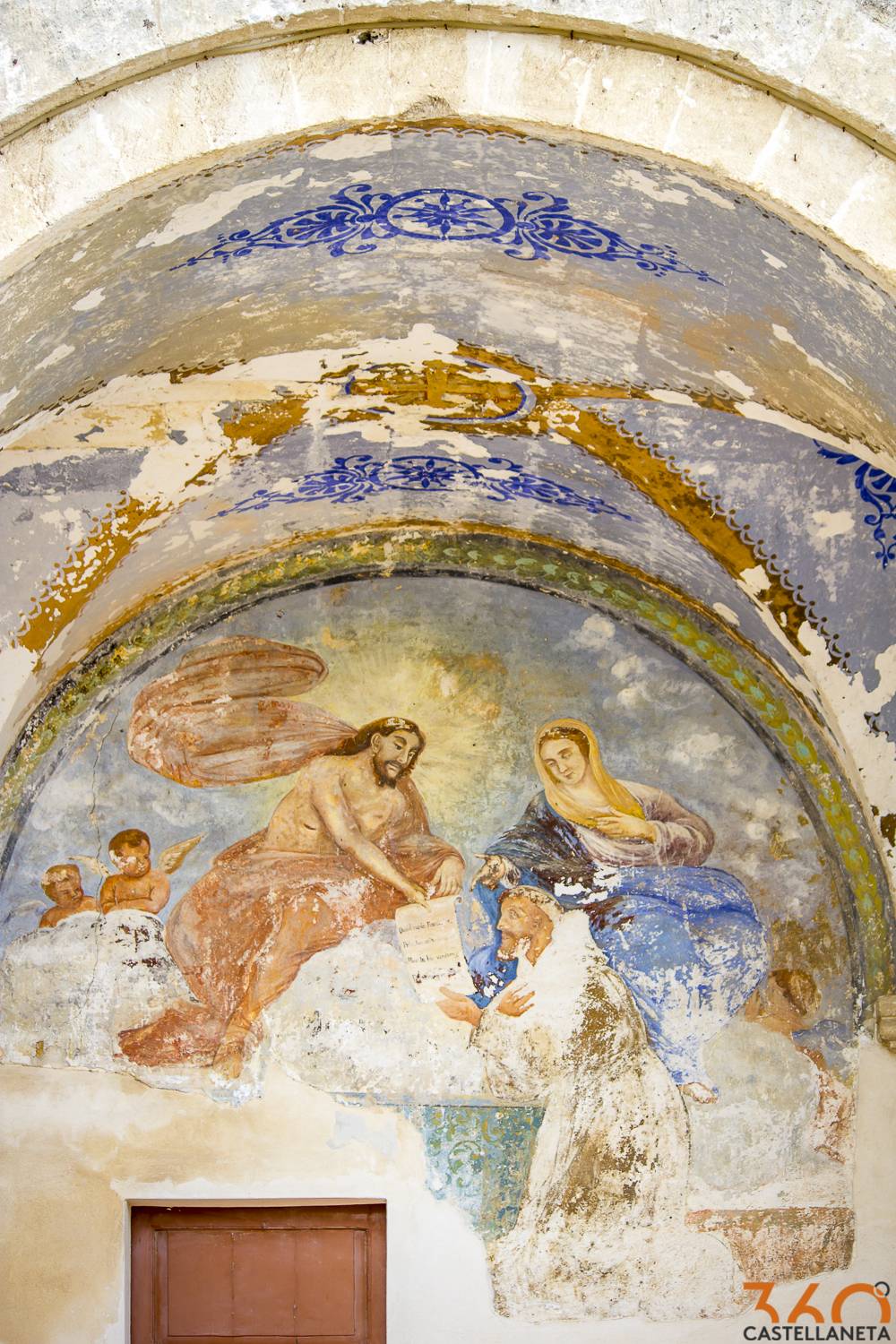
During the restoration, in 1988, a fresco of the Deposition of Christ from the Cross by an unknown artist was discovered on the right wall, near the entrance.
Second interior scene
The second altar of the left aisle houses the statuary group of the Passion, with Christ on the cross surrounded by the Virgin, Mary Magdalene and St. John. It was built by Friar Angelo da Pietrafitta at the end of the 17th century. In the case under the altar there is a statue of the Deposition.
The altars in the right aisle belonged to local noble families, as you can understand by the coats of arms of the D’Alagnis and De Mari-Del Vecchios.
Third interior scene
The high altar is made of polychrome wood with floral motifs: it frames an altarpiece painted in 1697, “The Pardon of Assisi” by Friar Giacomo Diso of Galatina, and it was created by Friar Francesco Maria of Gallipoli in the same year. At its sides there are six niches with busts reliquaries of the saints Eusebius, Justin Martyr, Crescentius, Adrian, Constance and Victoria.
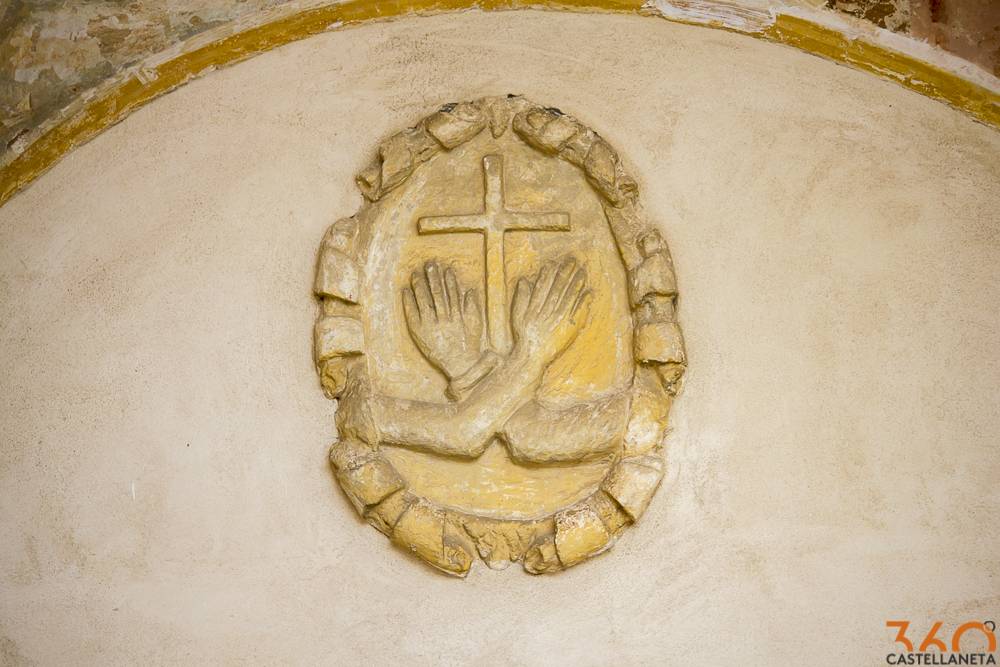
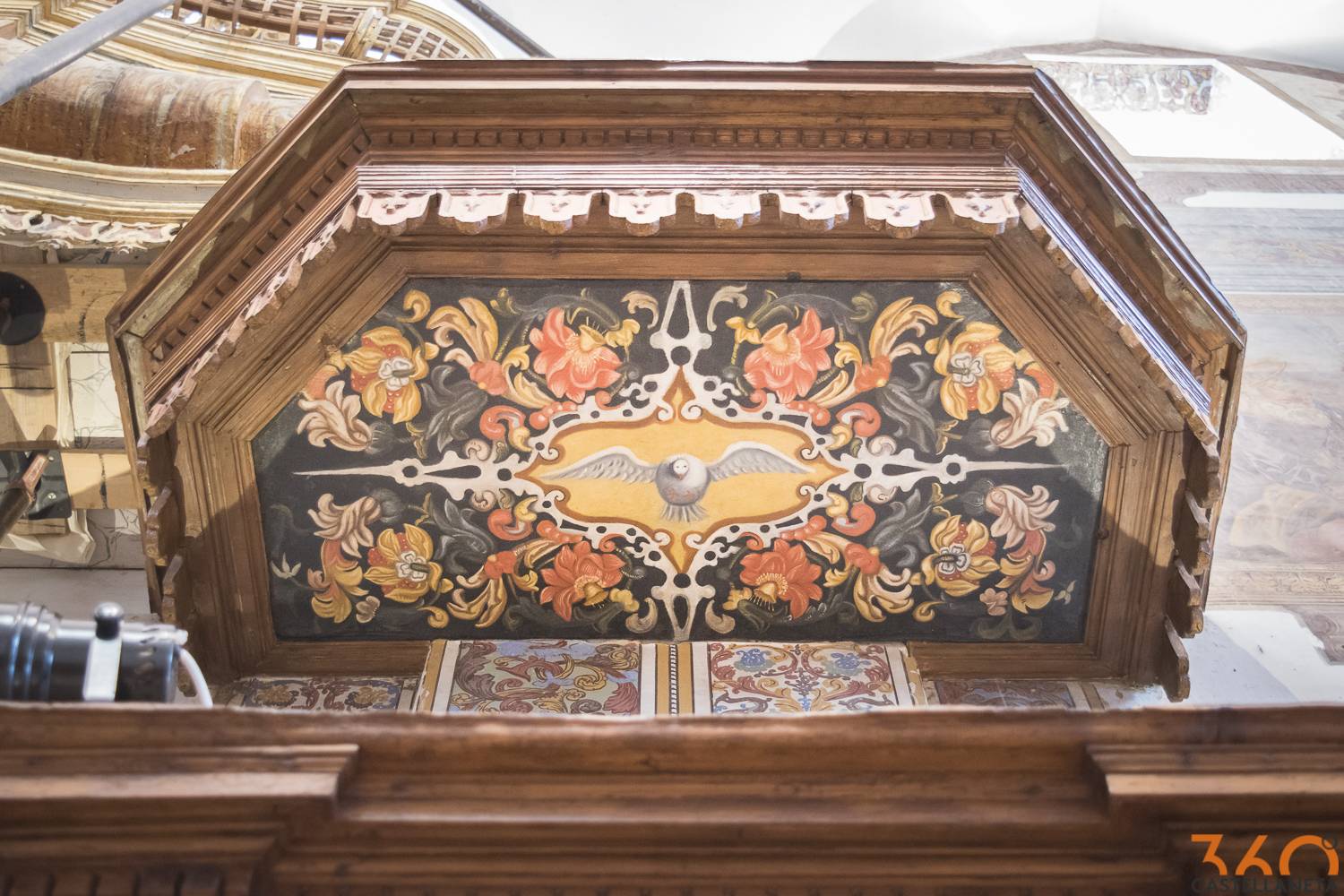
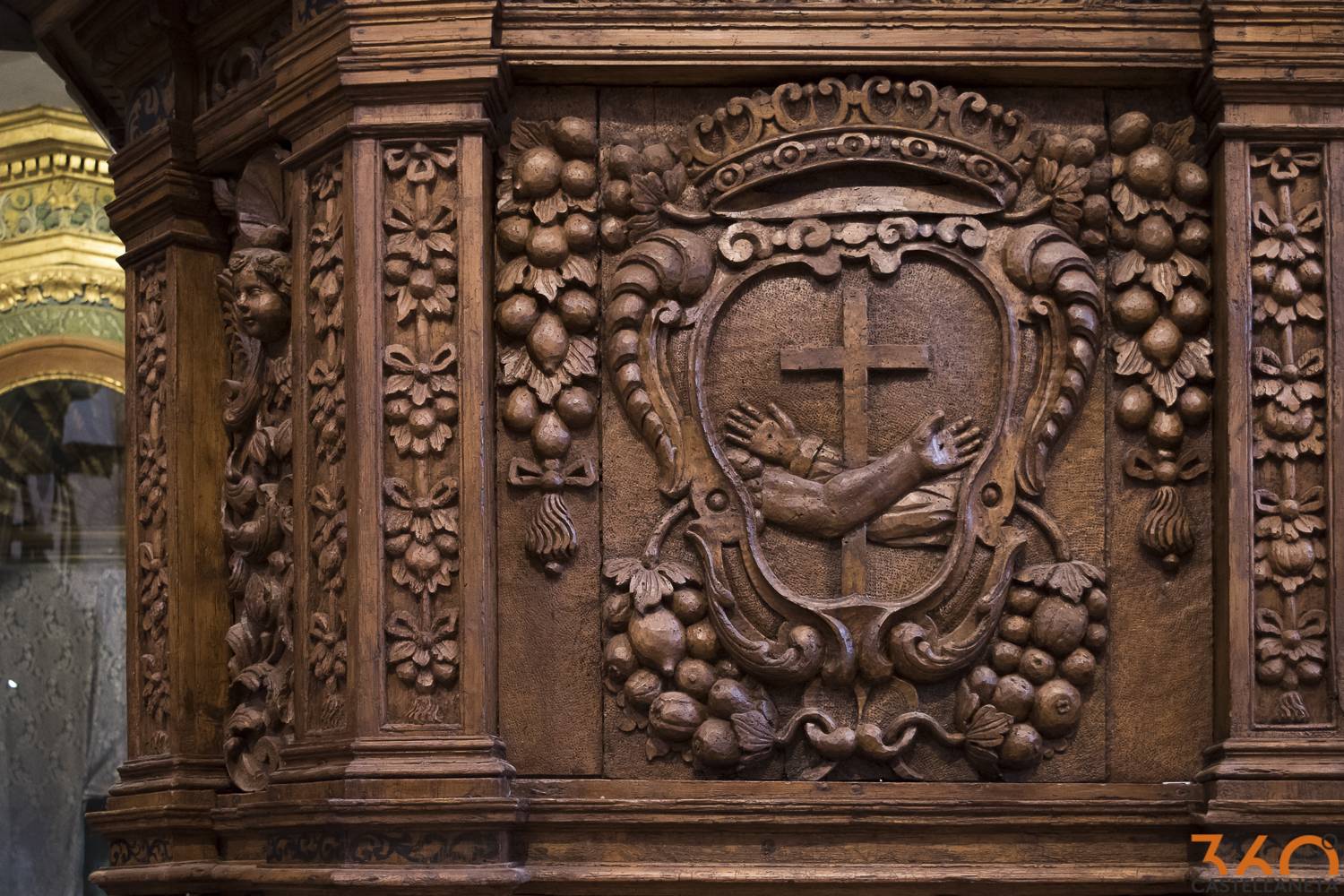
Wooden pulpit with the Franciscan symbol in the centre.
Left aisle
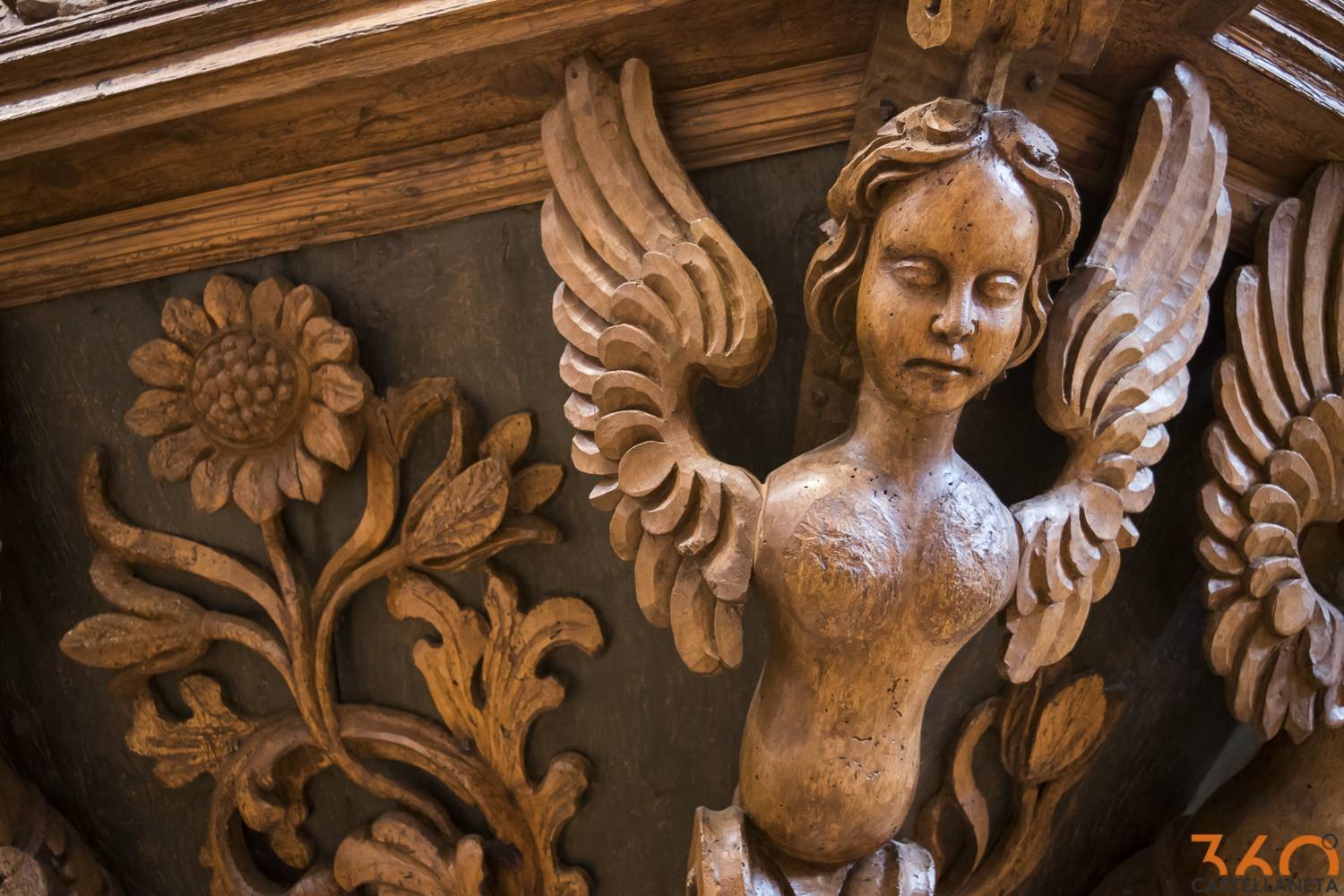
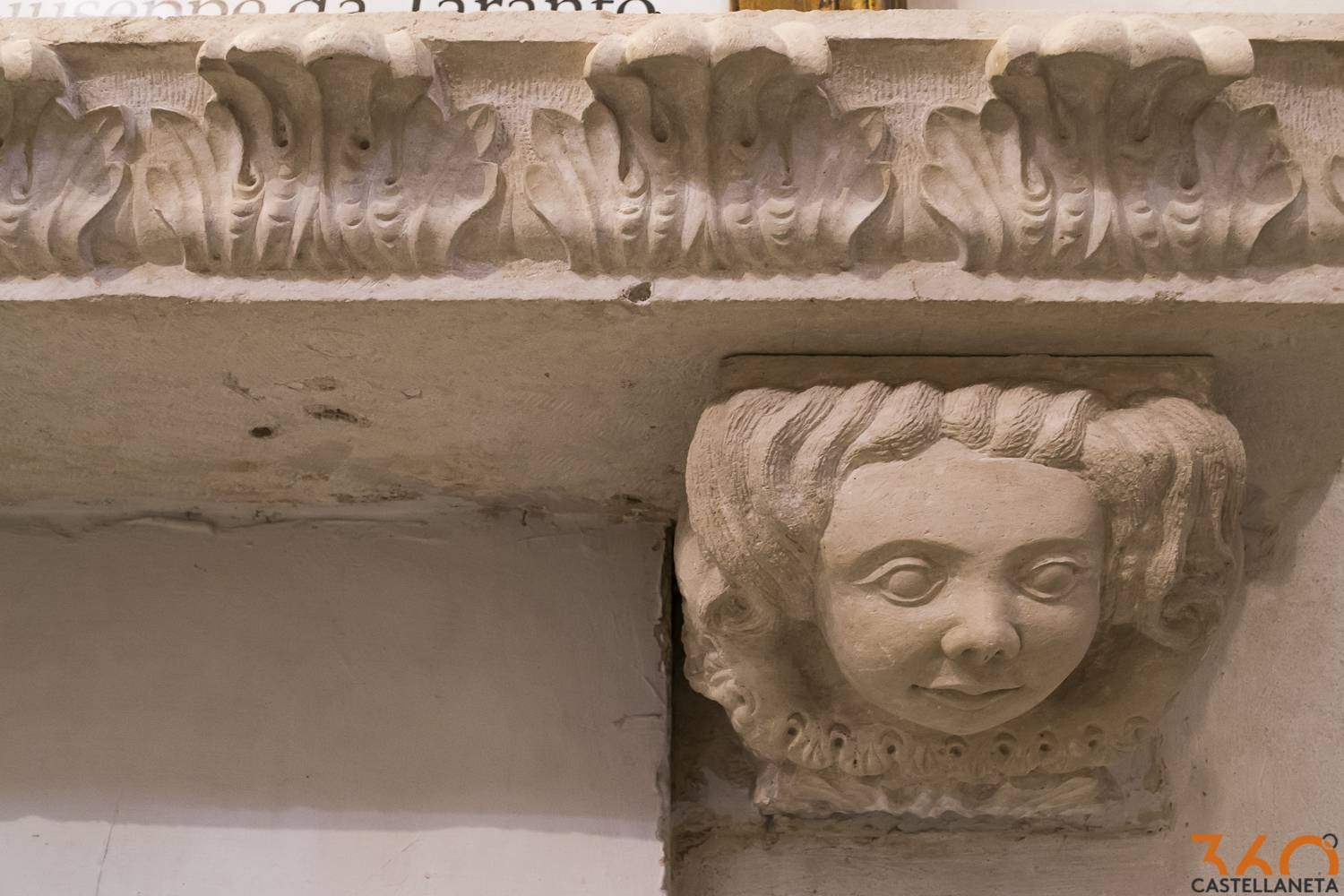
Spiral columns, heads of angels and the coat of arms of the Stella-Caracciolo family, feudal lords of Palagianello, decorate the altar at the end of the left aisle.
Cloister of the Convent of the Friars Minor
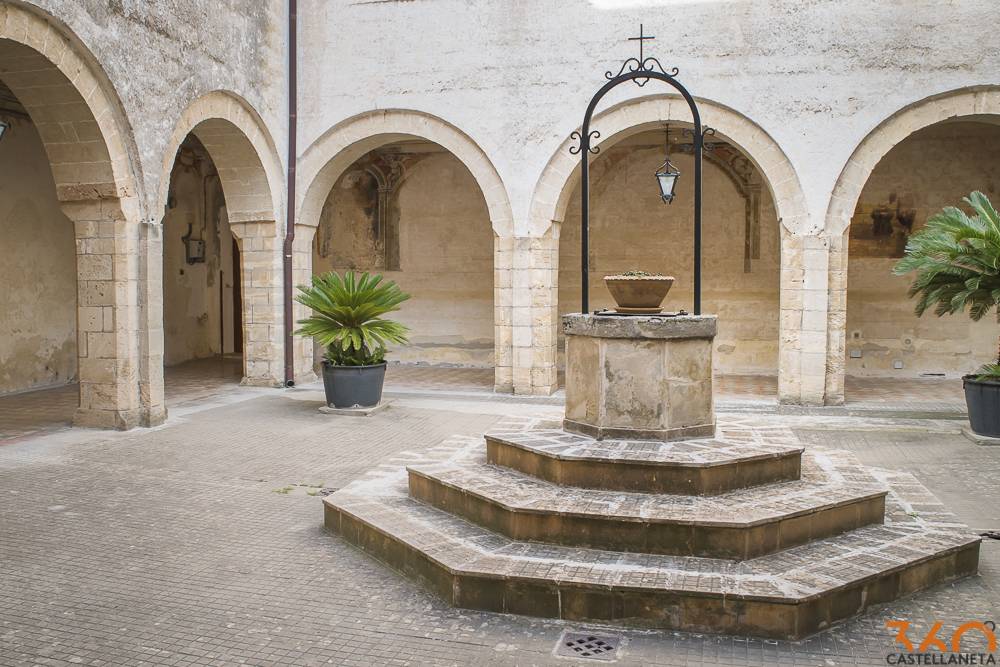
The construction of the convent of the Friars Minor, next to the existing church built in 1463, was authorized in 1471 and took place with the economic contribution of the faithful and the local administration. The upper floor houses the cells for the friars and a library. In 1603 the Friars Minor were replaced by the Reformed and the convent was enlarged in the current quadrilateral shape with a central four-sided portico and enriched in 1726 with frescoes painted by Giovan Battista Conversi representing the miracles of Assisi and the popes and cardinals of the Order of the Friar Minor Reformed.
Last tours
COMUNE DI CASTELLANETA