



Church of St. Michael the Archangel
 See all tours
Church of St. Michael the Archangel
360
Church of St. Michael the Archangel
Year of construction 1699
AddressVia Ospedale, 2
Coordinates40.63049699999999,16.936120399999936
Church
- Share on



Church of St. Michael the Archangel
Via Ospedale, 2
Exterior
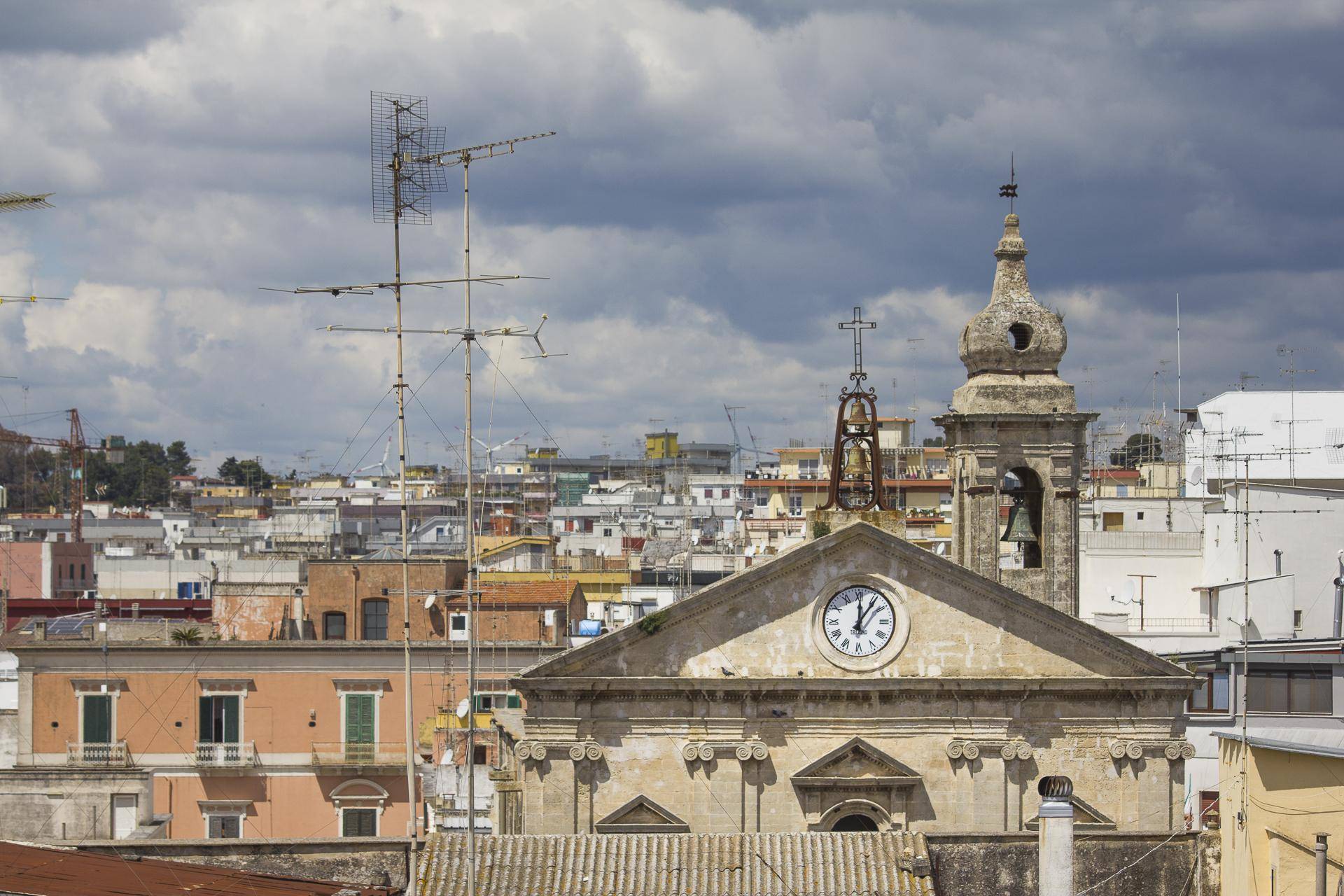
The Church of St. Michael the Archangel was designed in 1696 by a monk, Niccolò Melelli da Lequile, the probable author of the Church of the Crucifix in Galatone (near Lecce). The building, completed three years later, was originally outside the city walls. It had a large square, added with the purpose of giving grandeur and space to religious events: at that time, not even the Cathedral had such a feature. Built thanks to the offerings of the faithful with the University, it was opened to the public in 1723.
Over time, this church acquired an increasingly important role for the city in full expansion, so that in 1887 the local administration added a clock in the tympanum of the façade, while the Congregation of Charity, composed by the promoters of the construction, ran a small hospital next to it. At the beginning of the 20th century the church was entrusted to the Curia, and in 1902, with a bishop’s decree, it became the second largest parish of the city.
The façade has a double order of entablatures divided into three spaces by double lesenes crowned in the second order by Ionic capitals. In the first order there is the portal, surmounted by a broken tympanum and an empty niche; in the second order, a central window and two side niches crowned with triangular tympanums.
The pilasters on the façade are turned up. The interior of the church is illuminated by five high windows on each side.
Interior
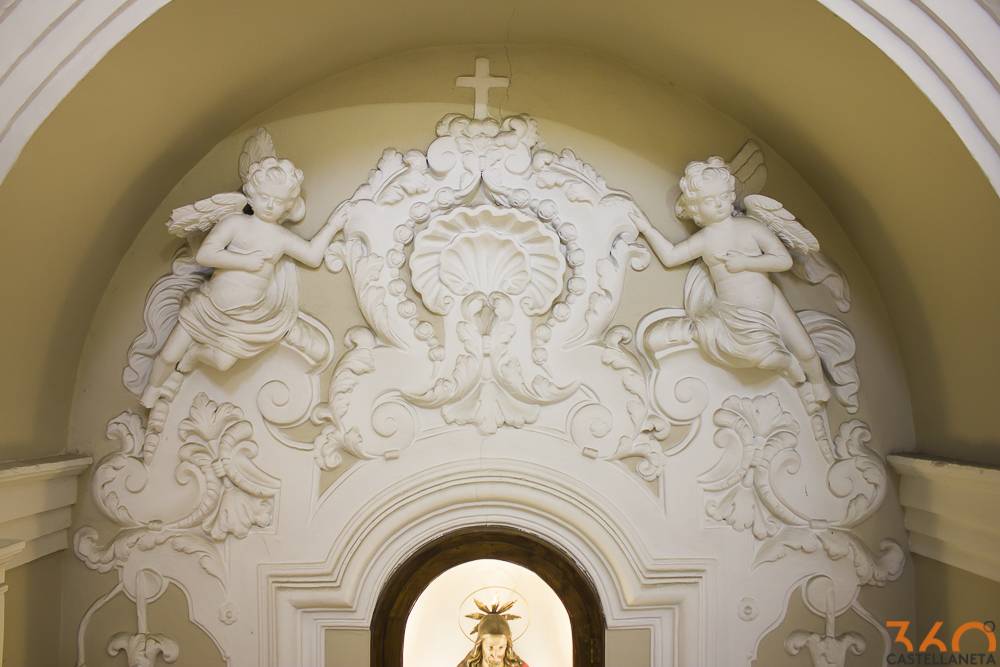
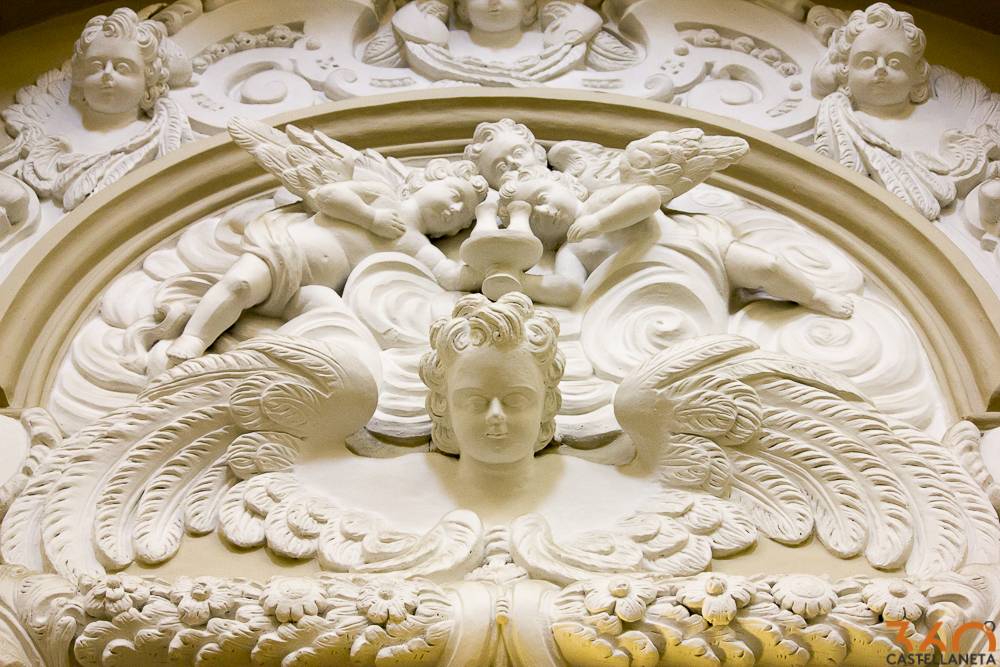
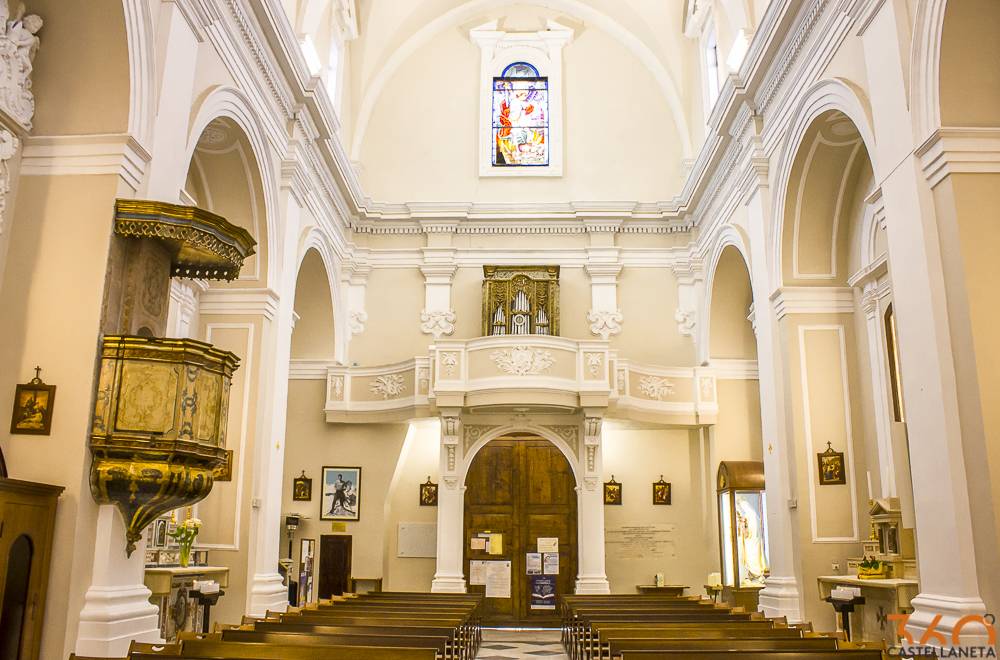
The interior has a single nave ending with a semi-circular apse and conch. It has three chapels on each side decorated by vegetal motifs, cherubs and palmettes, with vertical pilasters linked to the arches of the barrel vault.
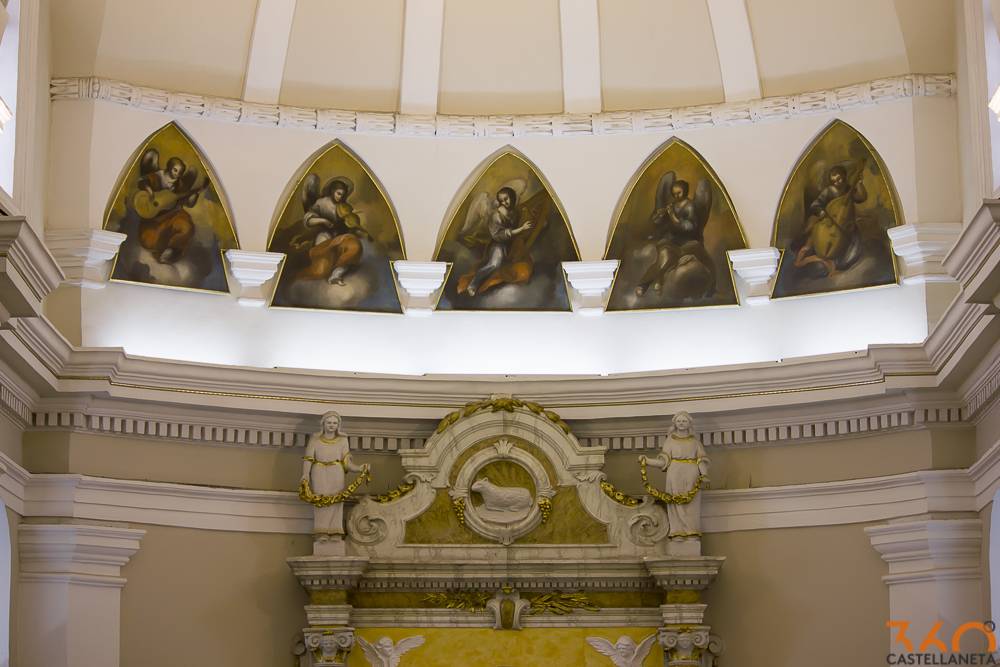
The presbytery houses the high altar in tuff covered with gilded stucco. The Crucifix is enclosed between two side columns in marbled stucco with a Corinthian capital that support a finial with volutes in stucco and marble and two statues of angels, built in 1930. On each side of the presbytery there is a mullioned loggia, connected to the rooms once used for the hospital. The sacristy can be reached from the back of the altar.
Above the portal there is a wooden loft for the organ and the choir, where a coat of arms and a date in the middle of the parapet, 1917, mark year of its construction and of the restoration of the building.
Second interior
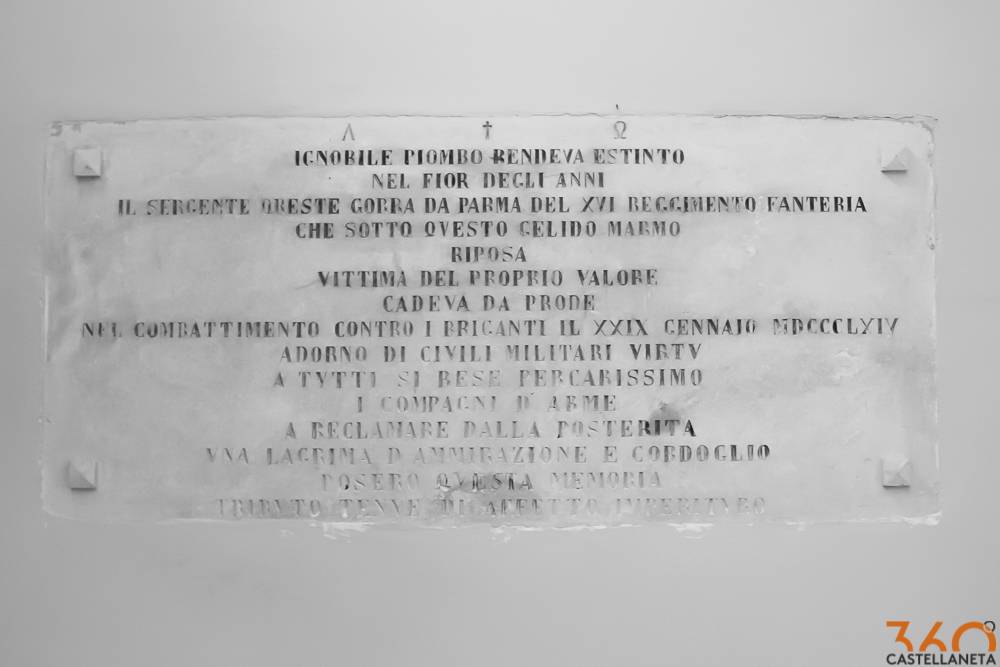
To the left of the entrance there is the memorial of a soldier, Sergeant Oreste Gorra da Parma of the 11th Infantry Regiment, who died on 29 January 1864 during clashes between regular troops and local brigands. With regard to brigands, in the territory of Castellaneta, the most notorious was the brigand “U Craparidd” (Crapariello, Antonio Locaso).
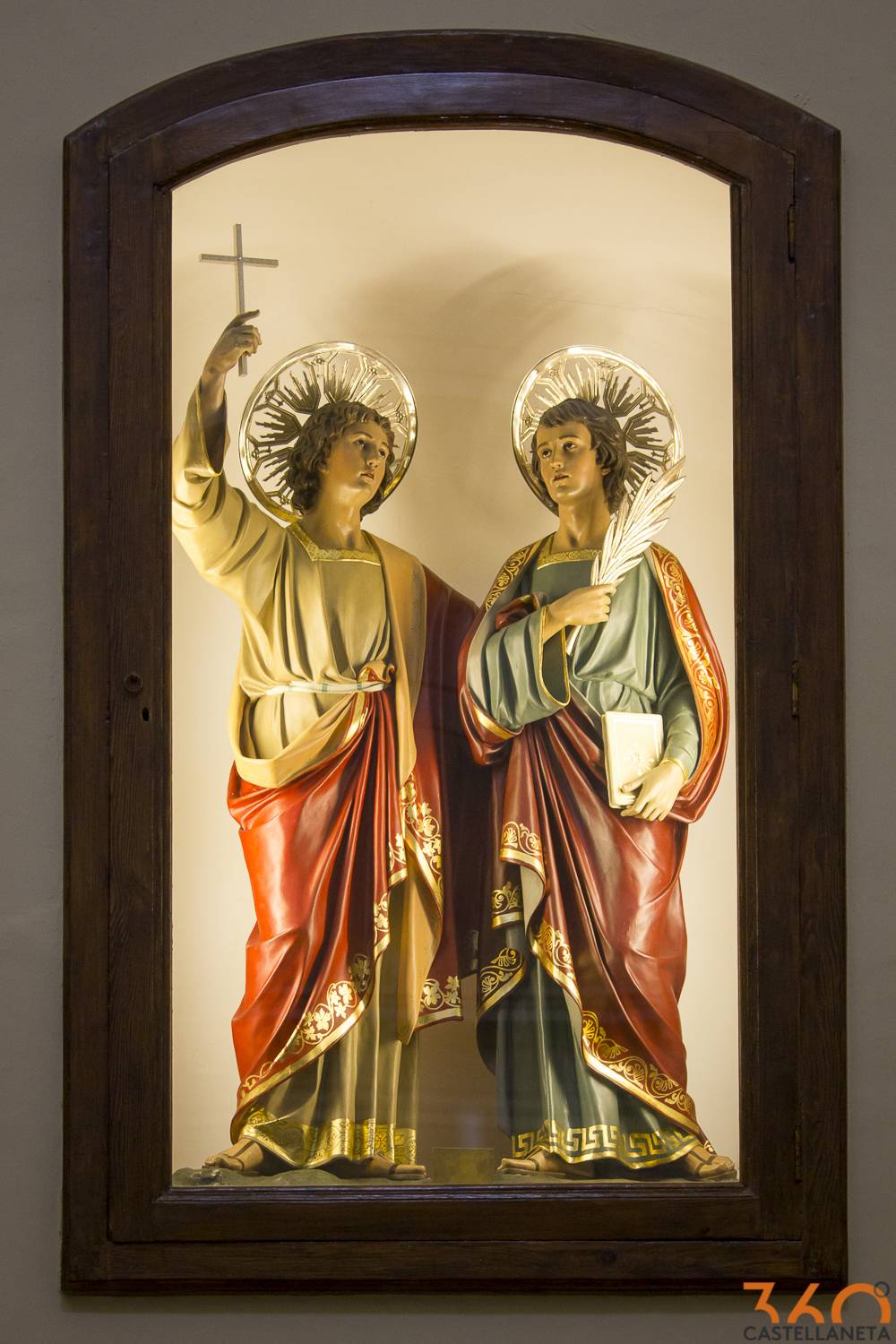
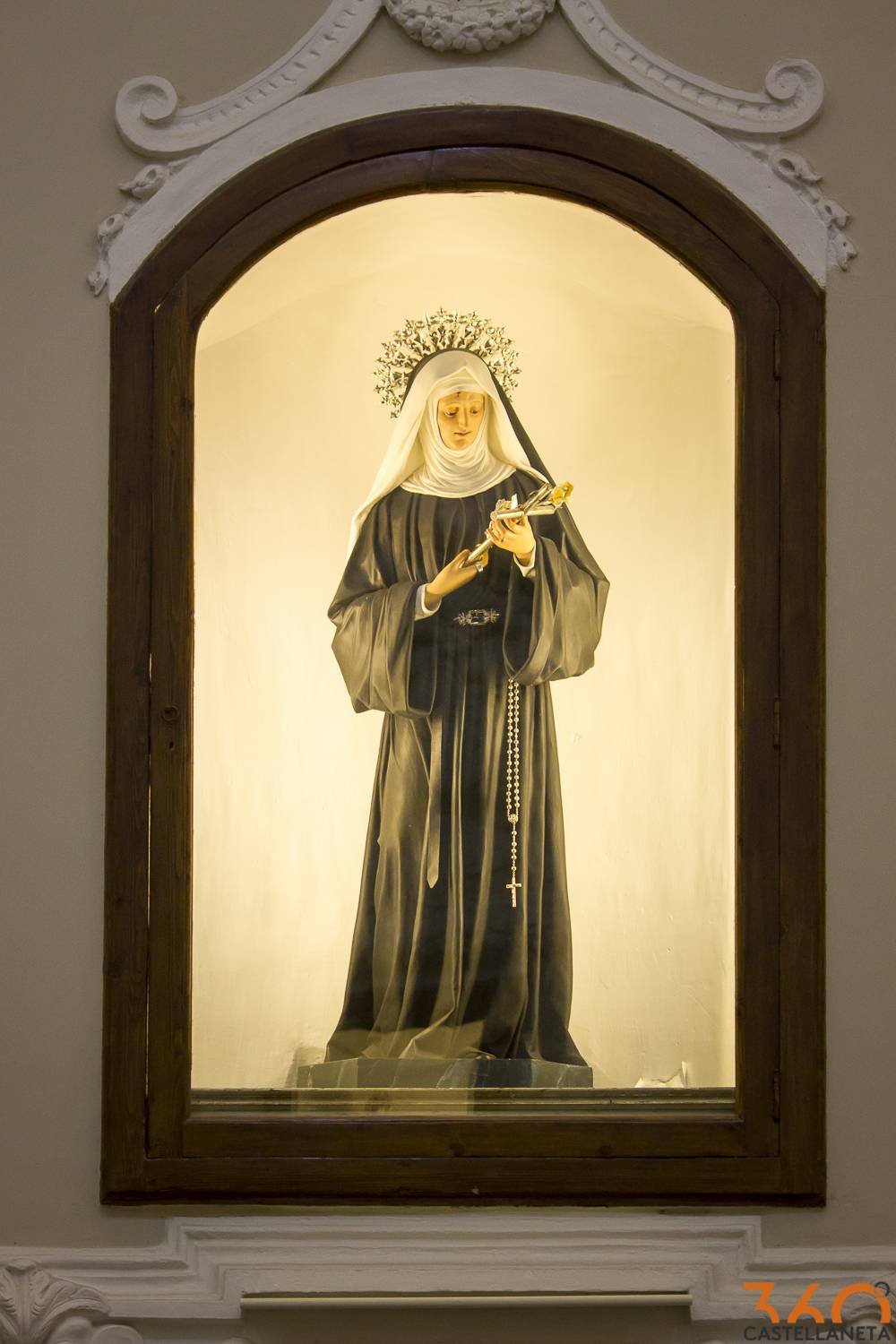
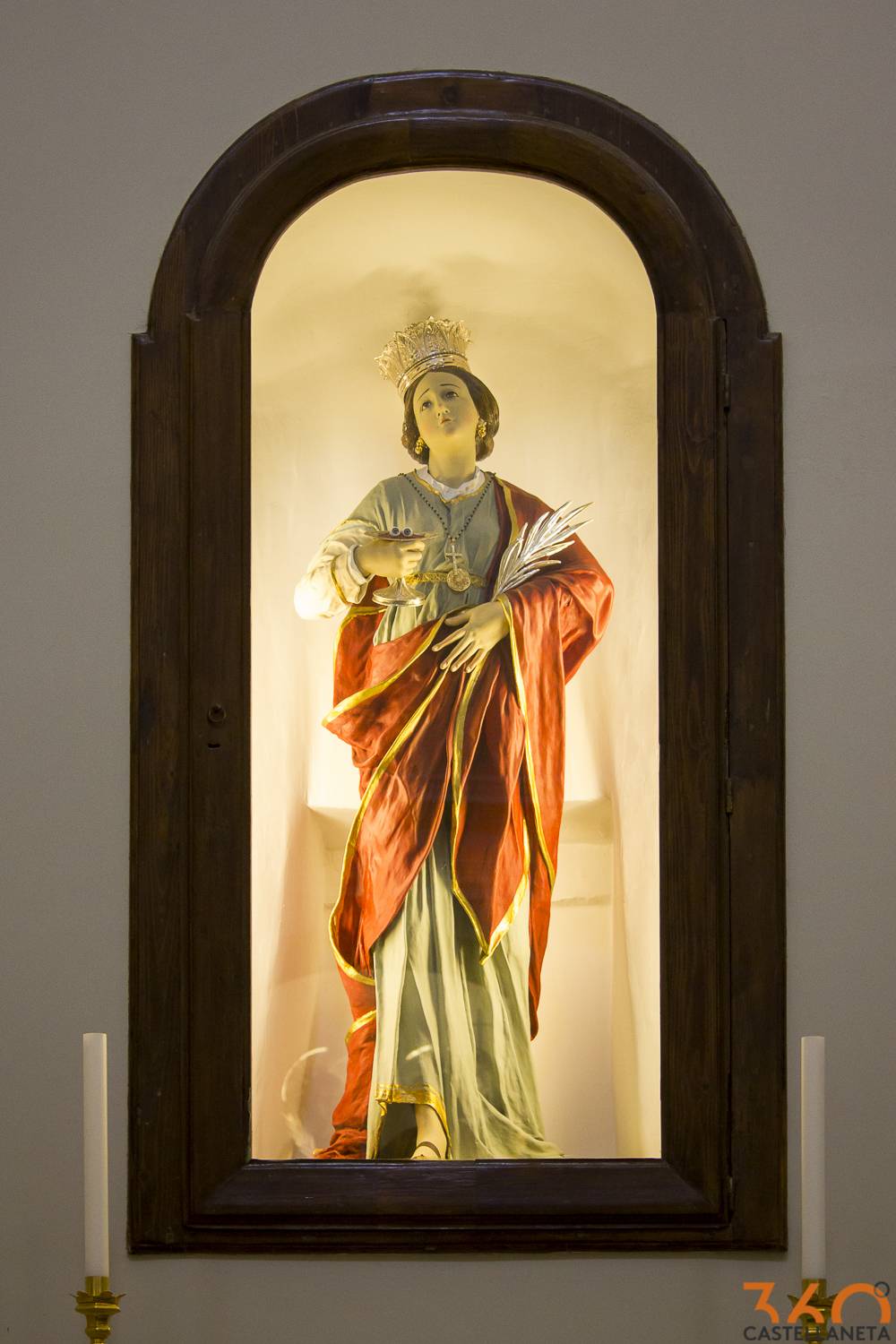
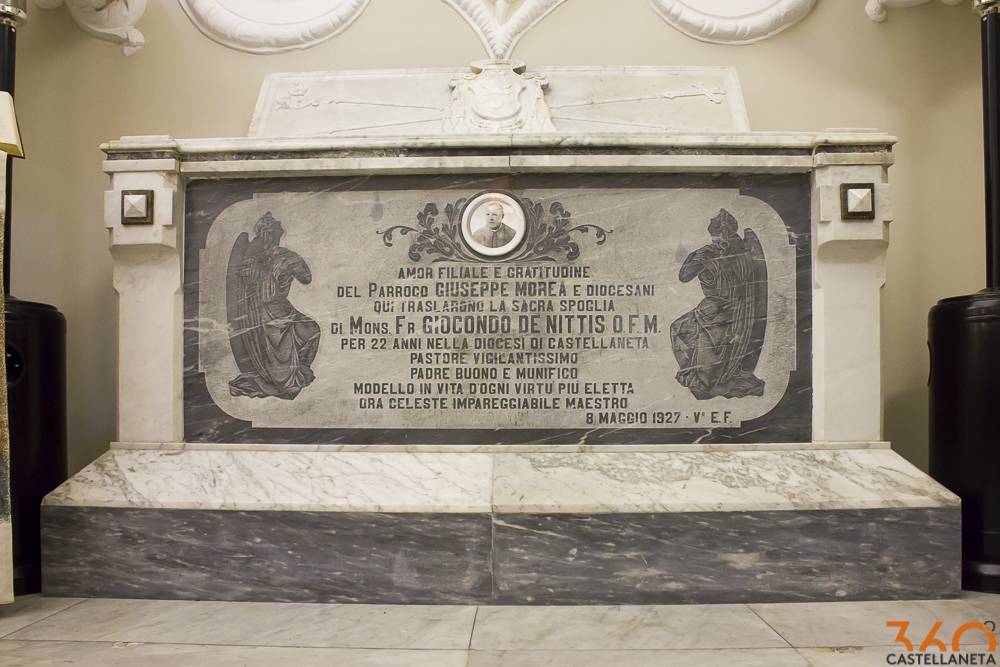
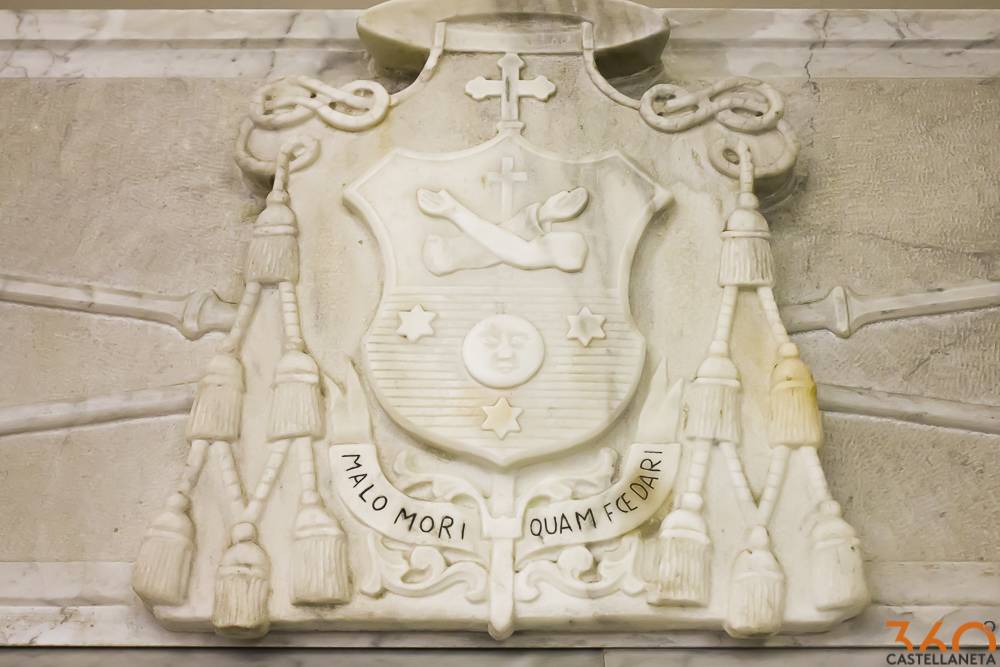
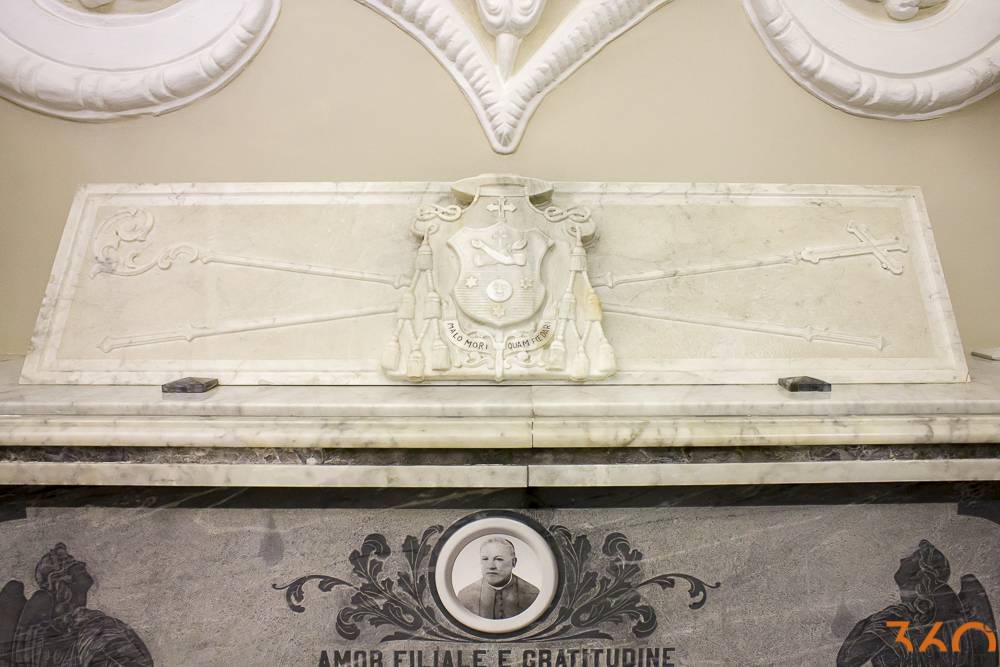
The first chapel to the left contains the baptismal font, which replaced the altar dedicated to St. Therese. The next one is the altar of the Saints Cosmas and Damian, followed by a niche dedicated to Saint Rita of Cascia. On the right the first altar was replaced by the marble sarcophagus of the Bishop De Nittis, the second altar is dedicated to St. Lucy, and the third was replaced by the confessional.
Third interior
In the space that separates the apse from the lunetted, semi-circular conch there are five 18th-century canvases of angels playing musical instruments.
On the presbytery, on the left wall, you can find a painting of a miracle by the Saints Cosmas and Damian, painted by G. Nelli and dated 1747. On the right, the other painting represents S. Januarius, Bishop of Benevento.
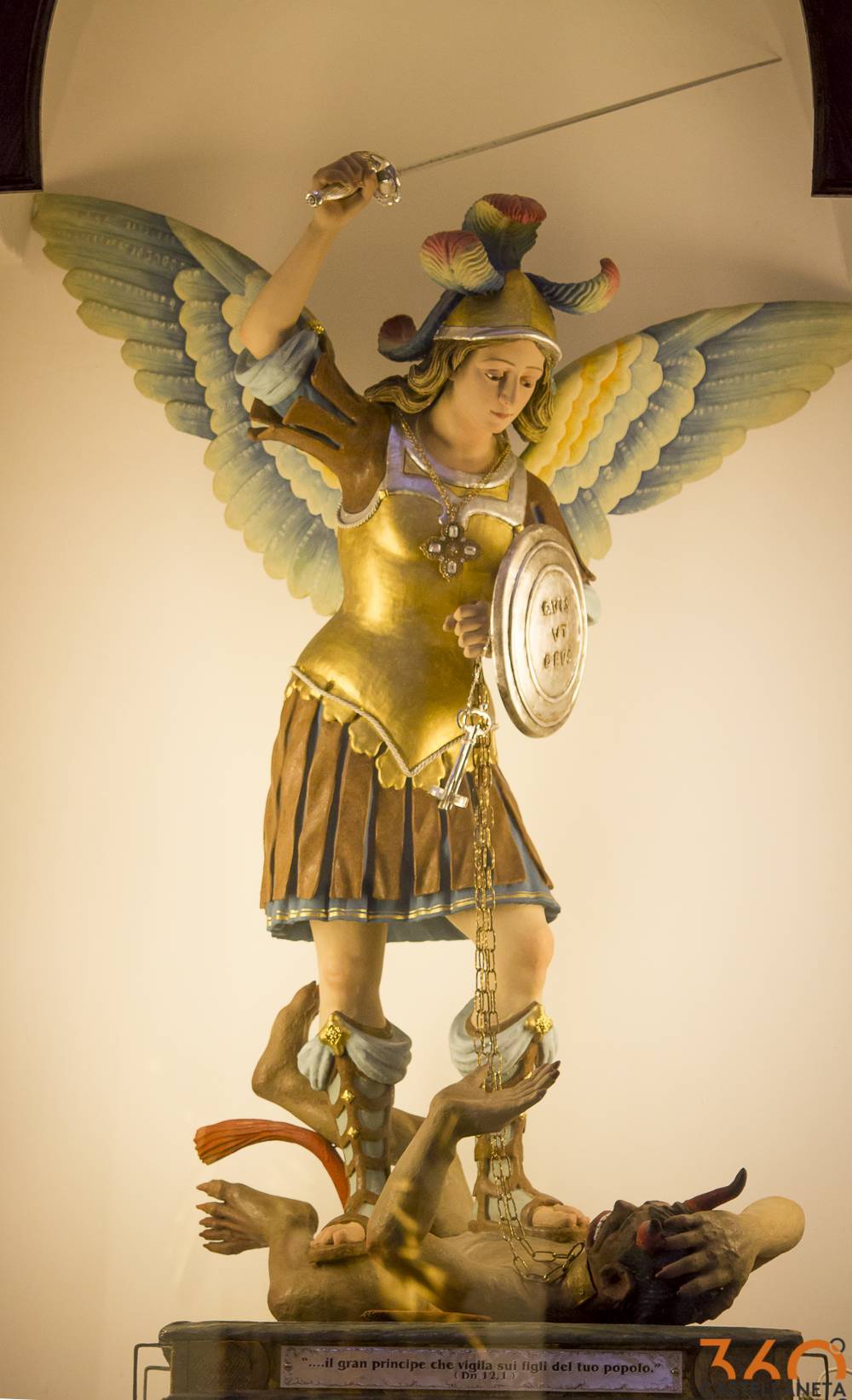
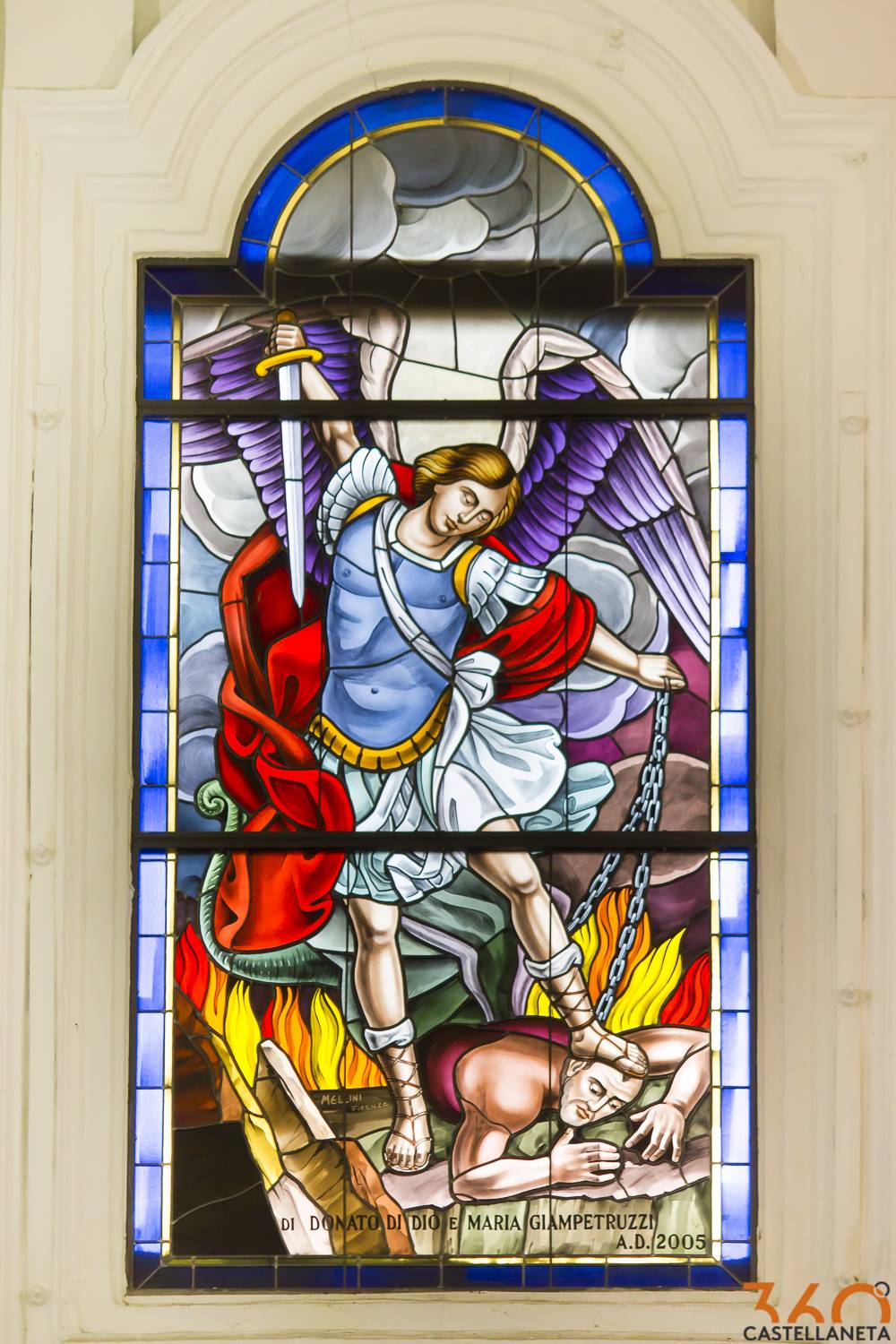
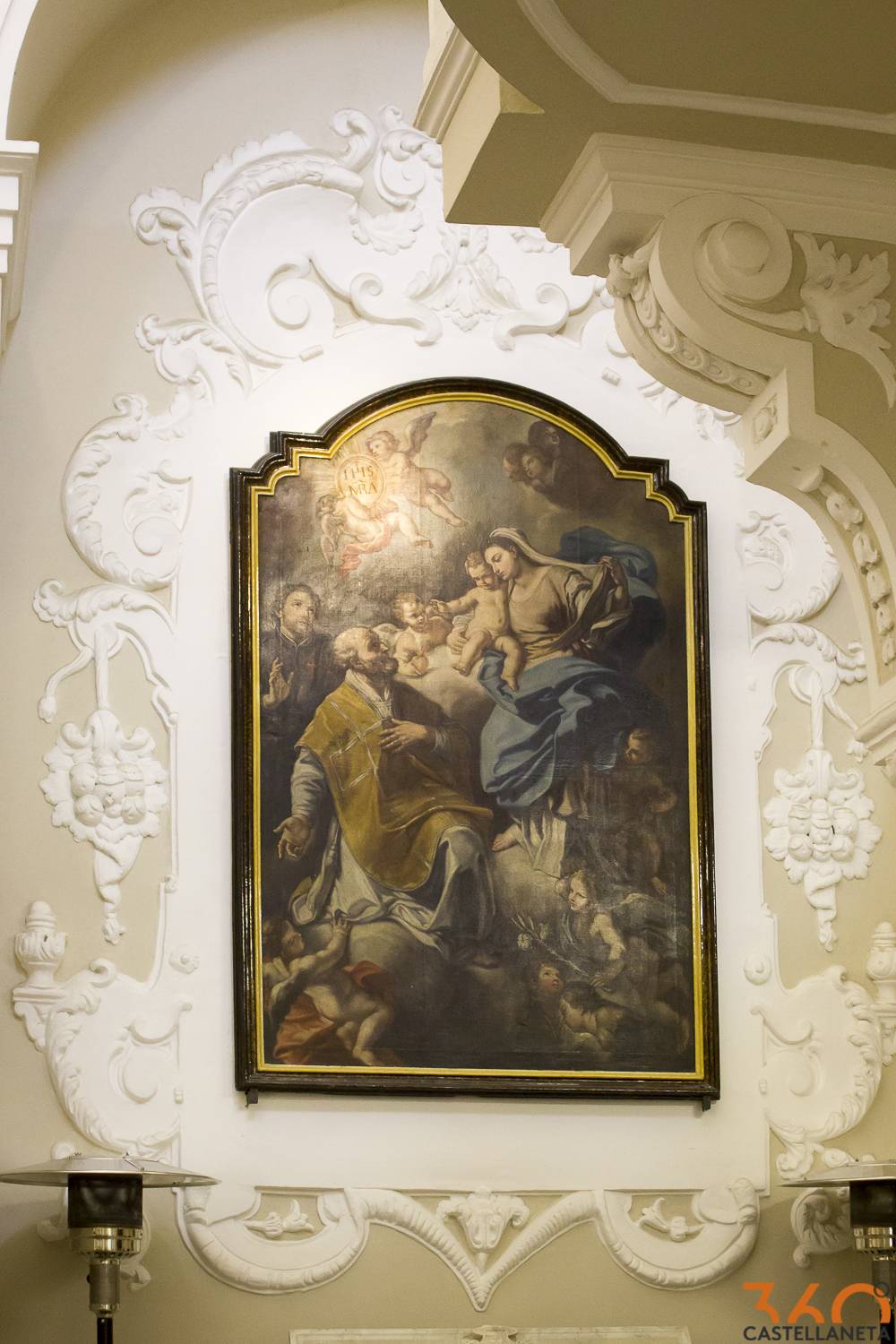
On the left, in the nave, there is the canvas of the Virgin among Saints, angels and nobles in prayer, painted by Ottavio Novata in 1594, while on the right the triumph of St. Michael the Archangel on demons, dating back to the 18th century.
Bell tower
The upper part of the bell tower, about 9-10 meters high, is placed laterally and crowned by an onion dome that houses two large bells made in 1792 and a smaller one dating back to 1877.
The reason for the construction of the church outside the city walls is not clear, but starting from 1710 many documents open with the invocation of the Archangel: this led scholars to think that a co-patron had joined the Patron of the city, St. Nicholas. The citizens of Castellaneta, in fact, show a particular devotion to the Eastern saints: on the western side of the ravine of St. Stephen there is the crypt called “St. Michael the Archangel”, where you can still admire a well preserved fresco dating back to the 12th century, faithful to the canons of Byzantine iconography and depicting the Archangel. This hypothesis is also confirmed by the gift to the saint in 1716 of a small silver rod with diamonds and amethysts, to be placed on the right hand of the statue during the festivities of May and September, and of a diamond cross for Saint Nicholas donated by Onofrio Montesoro, Bishop of the Diocese from 1696 to 1723.
Last tours
COMUNE DI CASTELLANETA